Guides and articles

Fire safety advice for landlords in Bexley

Find out what a crack in a fire door means, whether your building needs a stay-put policy, or how often an assessment expires. Each guide answers one specific question about keeping a home safe from fire.
All services in Bexley

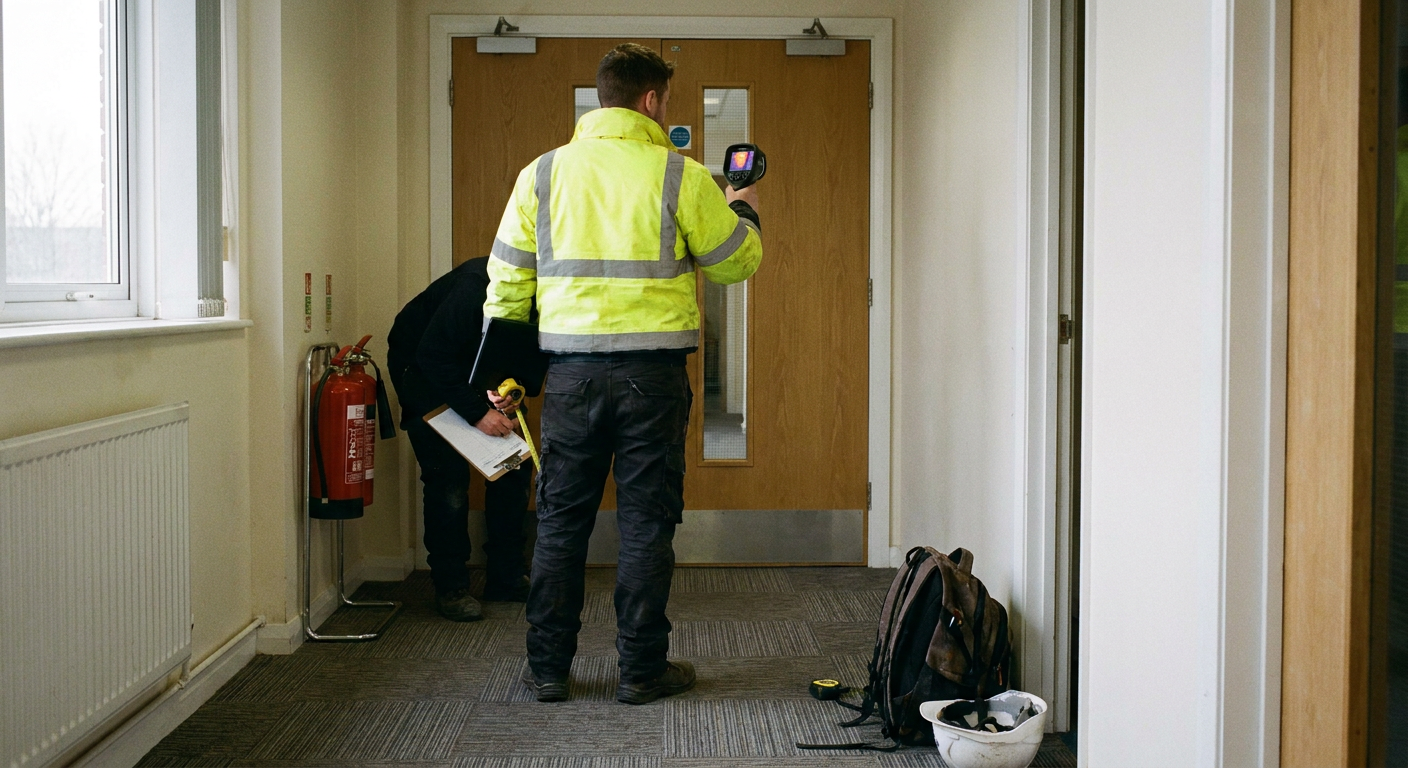
Worker using a thermal imaging device near a fire door in a corridor.
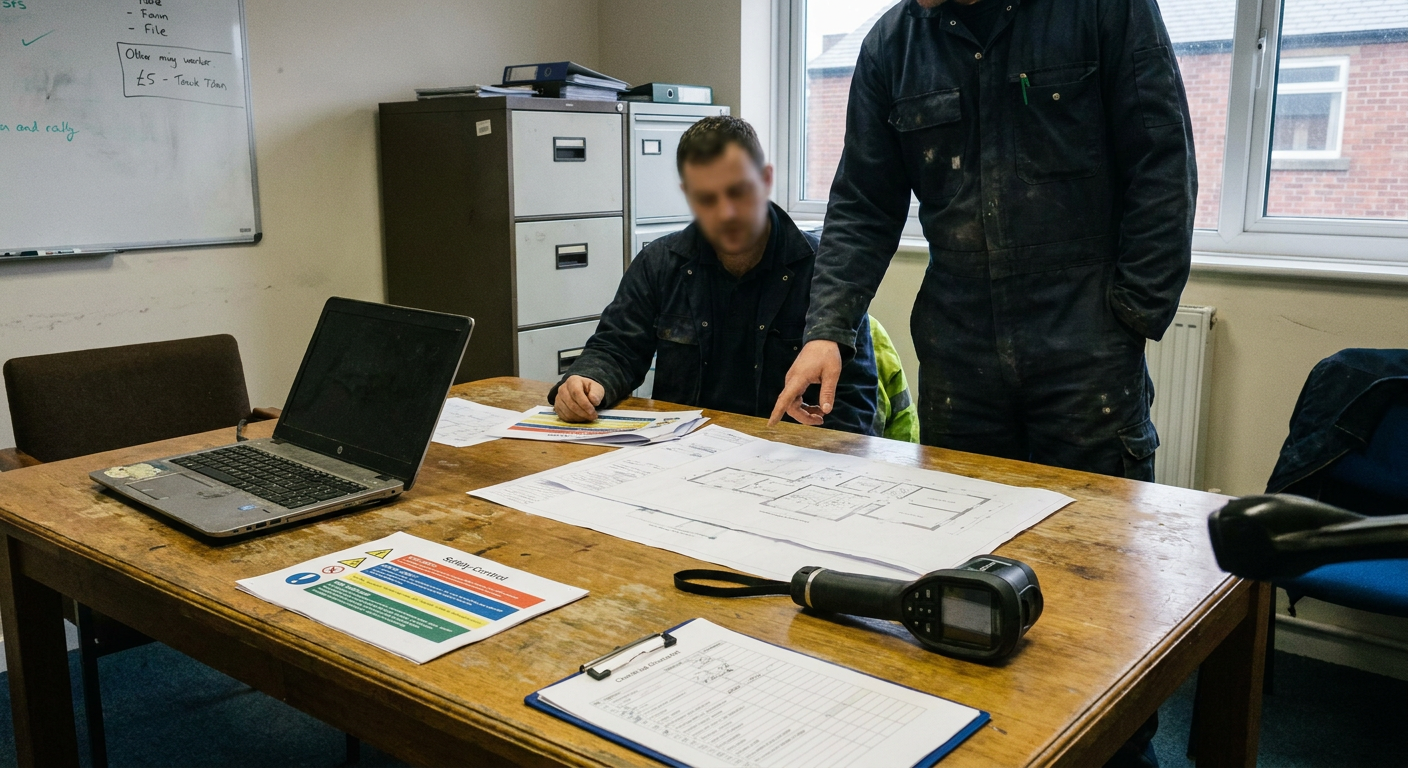
Two workers reviewing building plans on a table with safety equipment.

Understanding the law that applies to your home

If you own a house of multiple occupation or manage a block of flats, the law places specific duties on you. The first step is knowing who the responsible person is, because that determines who must act when something goes wrong.

A [fire risk assessment](/fire-risk-assessment) is the document that records those hazards and the steps taken to control them. Arranging one follows a set process, and the specialist firm who carries it out will walk through every room, checking escape routes and alarm points.

Assessments do not last forever. They expire when the building changes use, after significant alterations, or simply because enough time has passed. Knowing [when a review is due](/compliance/how-often-fire-risk-assessment-reviewed) prevents a gap in compliance that leaves residents exposed.

For landlords renting to multiple households, an [HMO fire risk assessment](/hmo-fire-risk-assessment) addresses the extra risks that come with shared kitchens and corridors. Student halls carry their own requirements, and [student accommodation fire safety](/student-accommodation-fire-safety) covers the particular problems found in buildings where residents change every term.

Doors, walls and the barriers between them

A fire door only works if it closes fully and its seals are intact. A [fire door inspection](/fire-door-inspection) checks the gaps around the frame, the hinges, and the self-closing mechanism. In flats and HMOs across Bexley, these doors are the primary barrier stopping smoke from reaching stairwells.

Since 2022, regulations require [quarterly fire door checks](/compliance/fire-door-checks-quarterly) in certain residential buildings. Recording what the specialist finds each quarter builds a history that proves the doors have been maintained.

Compartmentation is the wider principle behind those doors. A [compartmentation survey](/compartmentation-survey) examines the hidden fire barriers inside walls and above ceilings. Where pipes or cables have been pushed through plasterboard without sealing the hole, fire can travel between rooms unseen.

Sometimes the question is simply whose job it is to fix a door. Whether a [flat entrance door falls to the leaseholder or freeholder](/news/flat-entrance-doors-leaseholder-or-freeholder-duty) depends on the lease terms and the building's structure, and getting this wrong delays repairs.

Planning how people get out safely

When a fire starts, the difference between a safe exit and a blocked corridor comes down to planning. A [fire evacuation plan](/fire-evacuation-plans) maps the escape routes and assigns roles so that no one is left guessing in the dark.

In blocks of flats, the default approach has long been to stay put if the fire is elsewhere in the building. But a [stay-put or evacuate policy](/news/stay-put-or-evacuate-fire-policy-in-blocks-of-flats) must be based on the actual construction of the building. If compartmentation has failed, staying put becomes dangerous.

Some residents cannot use stairs quickly or at all. A [personal emergency evacuation plan](/news/personal-emergency-evacuation-plans-who-needs-a-peep) sets out exactly how someone with limited mobility will leave the building, and who will help them.

Clear directions matter as much as the plan itself. The [fire safety signs needed in communal areas](/news/fire-safety-signs-in-communal-areas-what-is-needed) point people toward exits and warn them away from lifts during an alarm.

Training the people who live and work there

Knowing what to do during a fire is not automatic. [Fire safety awareness training](/fire-safety-awareness-training) teaches residents and staff how to raise an alarm, where to gather, and why propping open a fire door puts everyone at risk.

Larger buildings need designated people to take charge. [Fire warden training](/fire-warden-training) prepares those individuals to sweep floors, check rooms, and report to the fire service on arrival. The specialist firm delivering the course covers the exact duties a marshal must perform.

Someone must also hold overall responsibility. The [nominated person service](/nominated-person-service) explains what that role involves day to day, from keeping records up to date to making sure contractors follow the building's fire strategy.

That strategy ties everything together. A [fire strategy report](/fire-strategy) documents how the building was designed to contain a fire, and any changes made since. It is the reference point for every other decision about safety.

Equipment, paperwork and seasonal risks

Extinguishers and alarms fail quietly. A guide to [fire safety equipment testing](/fire-safety-equipment-testing-advice) covers what the specialist looks for during a check, from pressure gauges on extinguishers to battery backups on smoke detectors. If the power cuts during a fire, the path to the exit must remain visible. [Emergency lighting checks in communal areas](/news/emergency-lighting-checks-in-communal-areas-of-flats) explain how those lights are tested, and where the results go in the [building's fire safety log book](/news/fire-safety-log-book-for-your-building-what-to-record). Paperwork keeps everything accountable. [Fire safety policy documents and procedures](/fire-safety-policy-and-procedures) set out the rules for a building, while broader [health and safety reports](/health-and-safety-reports) cover premises checks that overlap with fire prevention. Risks change with the seasons. [Winter fire safety checks](/compliance/christmas-and-winter-fire-safety-checks) address heaters, decorations and overloaded sockets. [Bin stores and rubbish](/news/bin-stores-and-rubbas-a-fire-risk-in-bexley-flats) remain a year-round problem, particularly when bags pile up against external walls. New habits bring new hazards.

Ask about fire safety in your home

Send details of what you have noticed. The enquiry goes to a specialist firm who handles fire risk management in Bexley. There is no obligation to proceed once they reply.

  • No obligation to proceed
  • Local Bexley specialists
  • Plain advice first

These details are passed to a specialist, as the privacy page describes.

Sending this costs you nothing. The privacy notice goes into what happens to your details. They reach one independent fire safety specialist covering Bexley, and that specialist may pay us when the enquiry is passed on. Comparing quotations with other firms remains entirely up to you.

Prefer email? Write to hello@bexleyfire.co.uk

Advice

  • Responsible person

    Under fire safety law the responsible person is whoever controls the premises, such as an employer, landlord or managing agent, and must keep it assessed.

  • Arrange assessment

    Arranging a fire risk assessment starts with the building type, how many floors and who uses it, so an assessor in Bexley knows what to look at.

  • Review frequency

    A fire risk assessment has no fixed expiry date, but it should be reviewed yearly and again after a fire, building work or a change of use.

  • Regulations 2022

    The Fire Safety (England) Regulations 2022 added duties for blocks of flats, from door checks to information for residents. Here is what applies and when.

  • Fire door checks

    Quarterly fire door checks in blocks of flats cover self-closers, gaps, seals and damage. Find what to look at, what to record and who can carry them out.

  • Council letter

    Had a council fire safety letter about your building? See what these notices usually ask for, the deadlines involved and how to work through the points.

  • HMO licence

    Councils set fire safety requirements for an HMO licence, covering alarms, fire doors, escape routes and signage. See what inspectors look for in Bexley.

  • Winter checks

    Winter fire safety checks cover heaters, decorations, blocked escape routes and alarm testing. See what to look at in a building over the Christmas period.

  • Advice and guides

    Fire safety advice and guides covering assessments, fire doors, alarms and landlord duties in Bexley, written in plain terms for owners and managers.