Fire safety guide

When does a fire risk assessment expire and need review?

A fire risk assessment does not carry a printed expiry date. The responsible person must keep it current by reviewing it whenever the building changes or at regular intervals, so that fire safety management in Bexley stays on firm ground.
Arrange a review

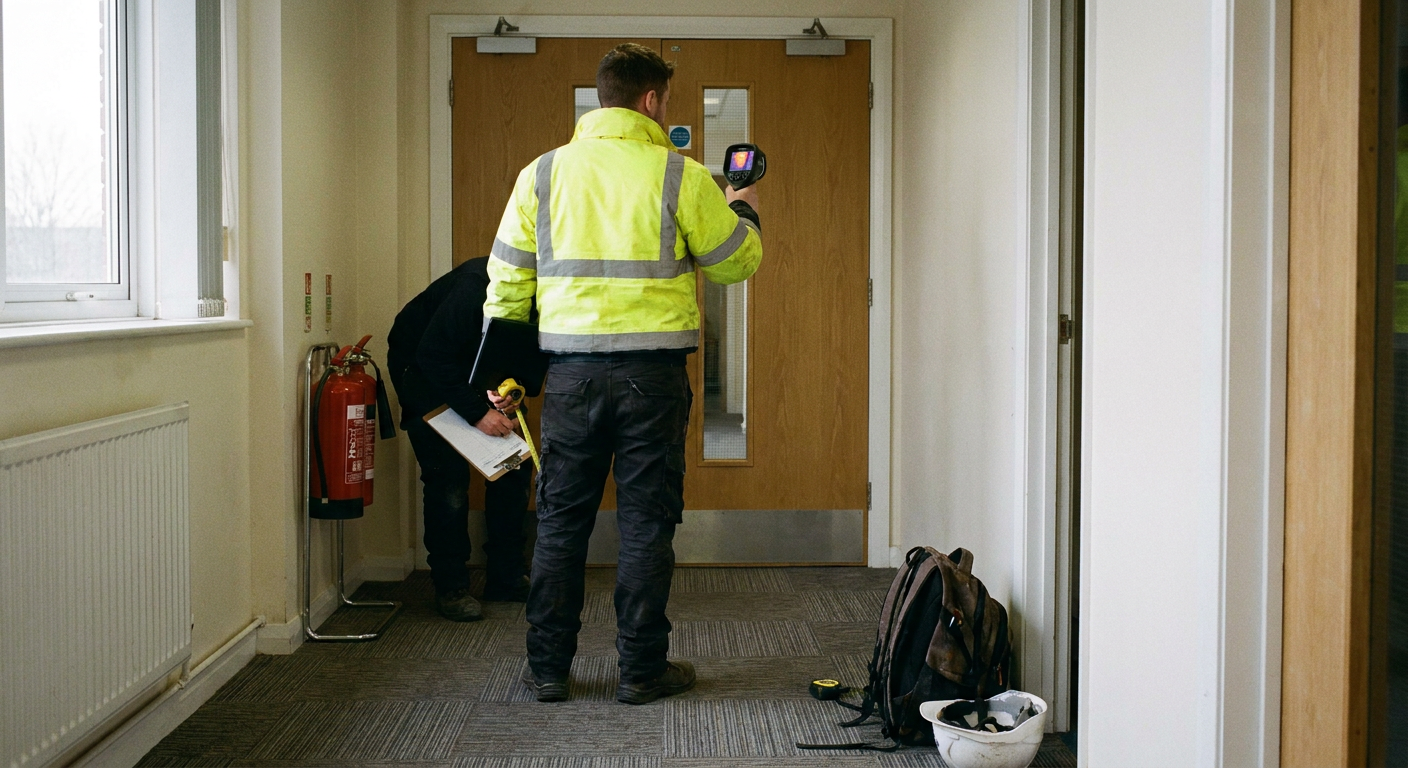
Worker using a thermal imaging device near a fire door in a corridor.
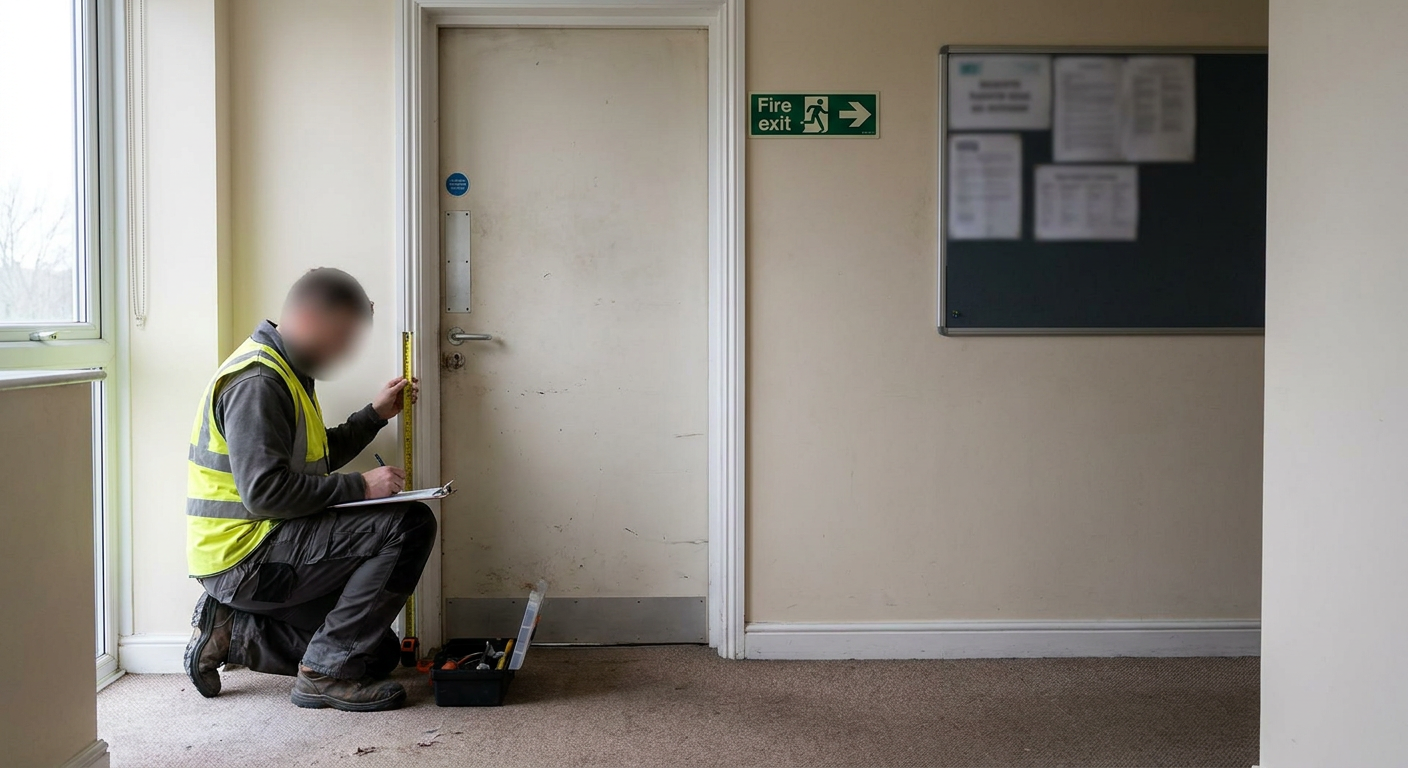
Worker in hi-vis kneeling to measure a fire door frame with a tape measure.

Does a fire risk assessment have a fixed expiry date?

People often ask when does a fire risk assessment expire, expecting a single answer like a car tax disc. There is no statutory shelf life printed on the document. The law requires the responsible person to keep the record up to date, which means revisiting it at set points and whenever something changes.

How long is an FRA valid depends entirely on the building and what happens inside it. A small shop with no alterations might go longer between visits than a block of flats where tenants move frequently. The fire risk assessment review interval is usually recommended by the assessor who carried out the original work. For many premises, an annual check is sensible. In blocks of flats across Bexley, an annual fire assessment keeps pace with the turnover of residents and the wear on shared doors and corridors.

If you are wondering whether your fire risk assessment is dated three years ago and still valid, the honest answer is that time alone does not settle it. What matters is whether anything has changed since the assessor last walked through. If nothing has shifted, the existing document may still hold. But three years without a look is a long stretch, and most specialists would advise at least a review by now.

Triggers that force an earlier review

Certain events make a review unavoidable, regardless of how recent the paperwork looks. These triggers for fire safety review exist because the original document was written for a specific version of the building. Change the building and the paper stops matching reality.

Refurbishment is one clear trigger. If walls come down, new partitions go up, or services are rerouted, the escape routes and compartmentation may no longer match the plan. A layout change after refurbishment means the specialist should be asked out as soon as the builders leave, before occupants settle into a space that behaves differently in a fire.

A change of use forces the same reckoning. Converting a ground floor shop to flats in Sidcup alters the occupancy profile, the hours people are present, and the way they evacuate. That shift demands a fresh look at every assumption the previous assessment made.

New tenants bring unfamiliar habits and needs. Someone with reduced mobility living on an upper floor changes evacuation planning. A fire, even a contained kitchen incident, can damage doors or smoke seals that were fine yesterday. Any of these events means it is time to redo the fire risk assessment rather than wait for the next scheduled date.

Review versus a brand new assessment

A review and a full reassessment are different jobs. During a review, the specialist takes the existing document and checks it against the building as it stands today. They walk the same routes, test the same assumptions, and note what has shifted. If the changes are minor, they update the record and sign it off again.

A brand new assessment starts from scratch. The specialist surveys every part of the premises, identifies hazards, evaluates who is at risk, and writes a fresh report. This is necessary when the building has changed beyond recognition, when the original document is missing, or when the previous work was done to a standard that no longer holds.

The price differs because the amount of time on site differs. A review of a small office takes less effort than surveying a multi-storey block for the first time. When you ask how to arrange a fire risk assessment, describe what has changed since the last visit. That tells the specialist whether they are updating a page or writing a book.

Proving currency to insurers and councils

Insurers want evidence that fire risk management is active, not a folder gathering dust. A dated assessment with no subsequent reviews looks abandoned. To prove the record is current, show the original report alongside any review notes, updated action plans, and maintenance logs for alarms and extinguishers.

In Bexley, council officers dealing with HMO licensing or housing standards will ask the same questions. They expect to see that the responsible person understands their duties and acts on them. A log book that records quarterly door checks, staff training dates, and equipment servicing backs up the assessment itself.

If a letter arrives from the council about fire safety, treat it as a prompt to check everything is in order. An out of date fire risk assessment weakens your position in any conversation with regulators or underwriters. Keeping the paperwork aligned with the physical state of the building is the only reliable defence.

What happens after a fire or near miss

A small kitchen fire might seem contained once the flames are out, but heat and smoke travel further than visible damage suggests. Door seals warp, alarm sensors coat with residue, and escape routes fill with debris that was not there yesterday. Whether you have to reassess the whole building depends on the scale of the event and what systems it touched. They check whether compartmentation held and whether emergency lighting still functions. If the fire compromised structural elements or spread through voids, a wider [compartmentation survey](/compartmentation-survey) becomes necessary. Near misses matter too. A bin store fire that did not reach the flats still tests the external wall materials and the distance between combustible storage and windows. Each incident adds data that the original assessment could not have predicted. Recording these events and acting on them is how fire safety stays ahead of the next problem.

What affects the cost of a review or reassessment

Every building differs in size, use, and condition, so the time a specialist spends on site varies from job to job.
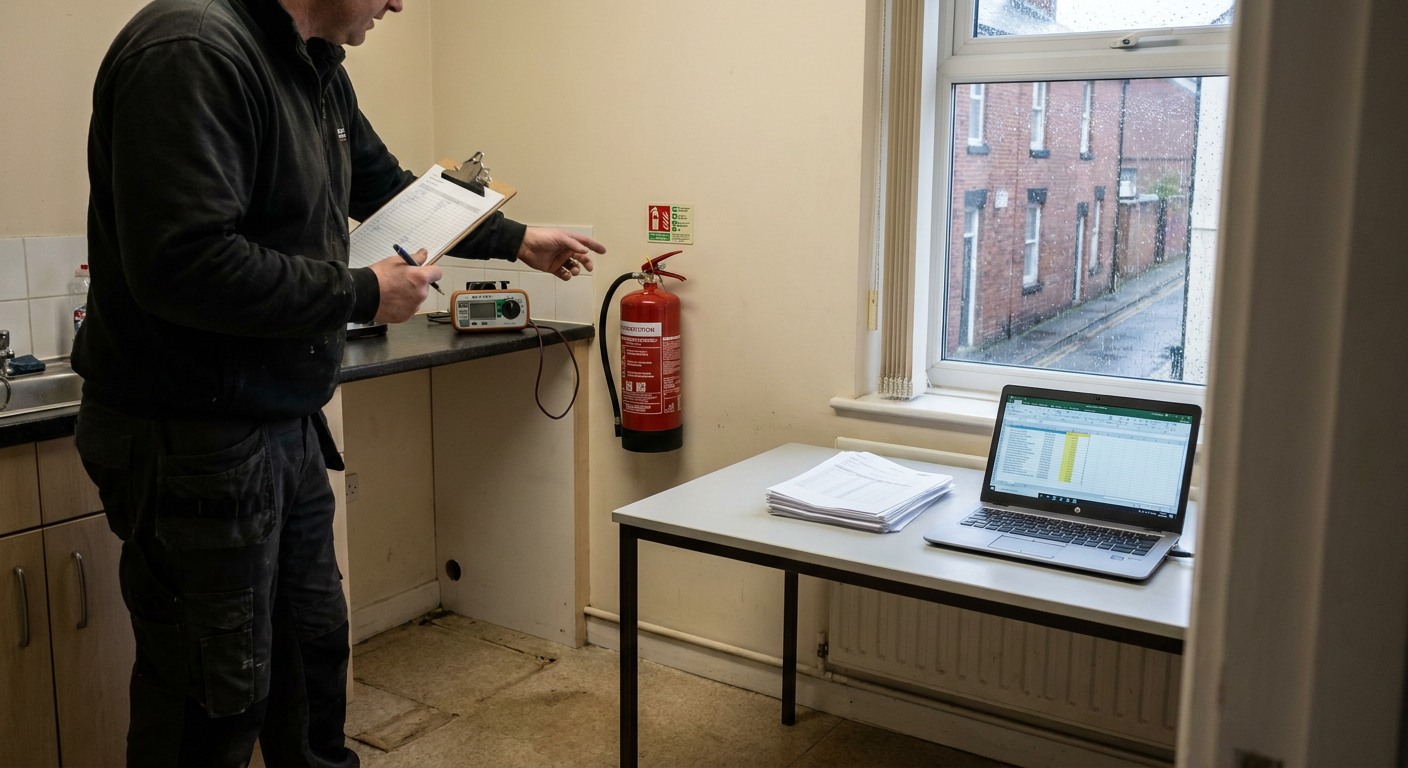
An assessor with a clipboard and extinguisher inspects a room with a laptop nearby.
Size and number of floors
More rooms and levels mean more areas to walk, measure, and record during the visit.
Type of occupancy
Sleeping risks in flats or HMOs demand closer attention to detection and escape routes.
Scope of changes
A minor update costs less than a full survey triggered by major refurbishment works.
Existing documentation
Clear previous reports speed up a review, while missing records require starting from scratch.

The specialist explains the cost of your particular job before anything is agreed.

Recognising when your assessment needs attention

The point is how soon to act rather than trying to name the exact problem yourself. Only a site inspection settles what the building actually needs right now.

  • A fire happened recently, even a small one contained to a single roomToday

    Heat and smoke may have damaged doors, seals, or alarm components that looked fine before the incident.

    What to do Ask a specialist to inspect the affected areas and routes without delay.

  • Walls were moved or new partitions built during refurbishmentToday

    Escape distances and compartmentation lines drawn on the old plan no longer match the physical layout.

    What to do Book a review before occupants rely on the altered space.

  • The building use changed, such as a shop becoming residential flatsSoon

    Different occupants sleep, cook, and evacuate in ways the original assessment never considered.

    What to do Arrange a fresh assessment suited to the new occupancy type.

  • New tenants moved in, especially those needing extra help to evacuateSoon

    Personal emergency plans and warden duties may need updating to cover unfamiliar needs.

    What to do Request a review of the evacuation strategy and support arrangements.

  • The report is over two years old with no recorded updatesWorth watching

    Time alone does not invalidate the document, but long gaps suggest hazards may have drifted unnoticed.

    What to do Schedule a routine review to confirm everything still holds true.

None of this diagnoses your specific home or premises. Anything sudden or worsening quickly is worth asking a specialist about now.

Ask about a review for your building

Send a short description of the premises and what has changed. A specialist reads it and replies with what is needed next. Sending an enquiry does not commit you to any work or fee.

  • No obligation to proceed
  • Local to Bexley
  • Plain advice first

These details are passed to a specialist, as the privacy page describes.

Sending this costs you nothing. The privacy notice goes into what happens to your details. They reach one independent fire safety specialist covering Bexley, and that specialist may pay us when the enquiry is passed on. Comparing quotations with other firms remains entirely up to you.

Prefer email? Write to hello@bexleyfire.co.uk