Guide

How to arrange a fire risk assessment for your building

Find out what details to gather before booking a fire risk assessment in Bexley, what the assessor needs on the day, and what arrives afterwards. This guide sets out each step so you know exactly what happens.
Enquire now

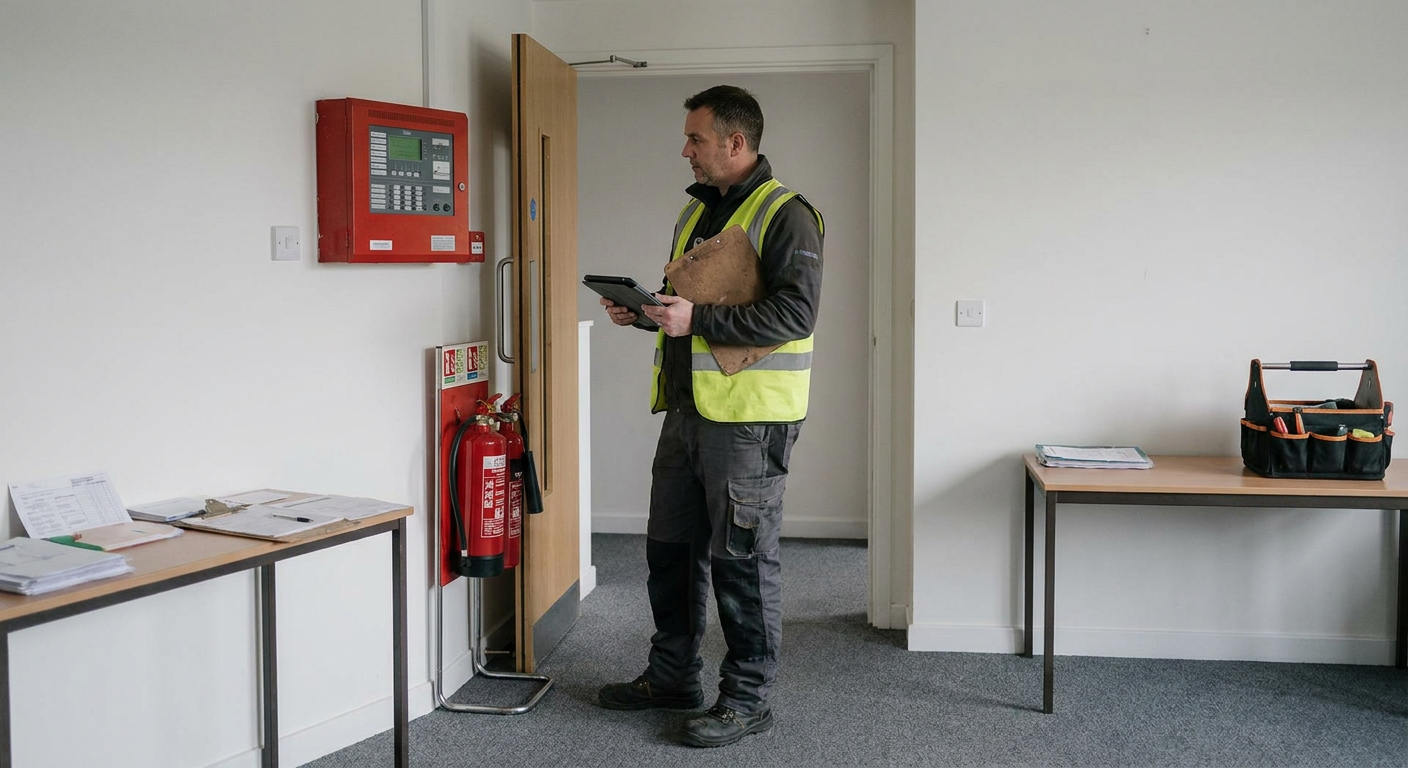
Assessor in hi-vis holding tablet and clipboard near fire alarm panel and extinguishers

How to arrange a fire risk assessment
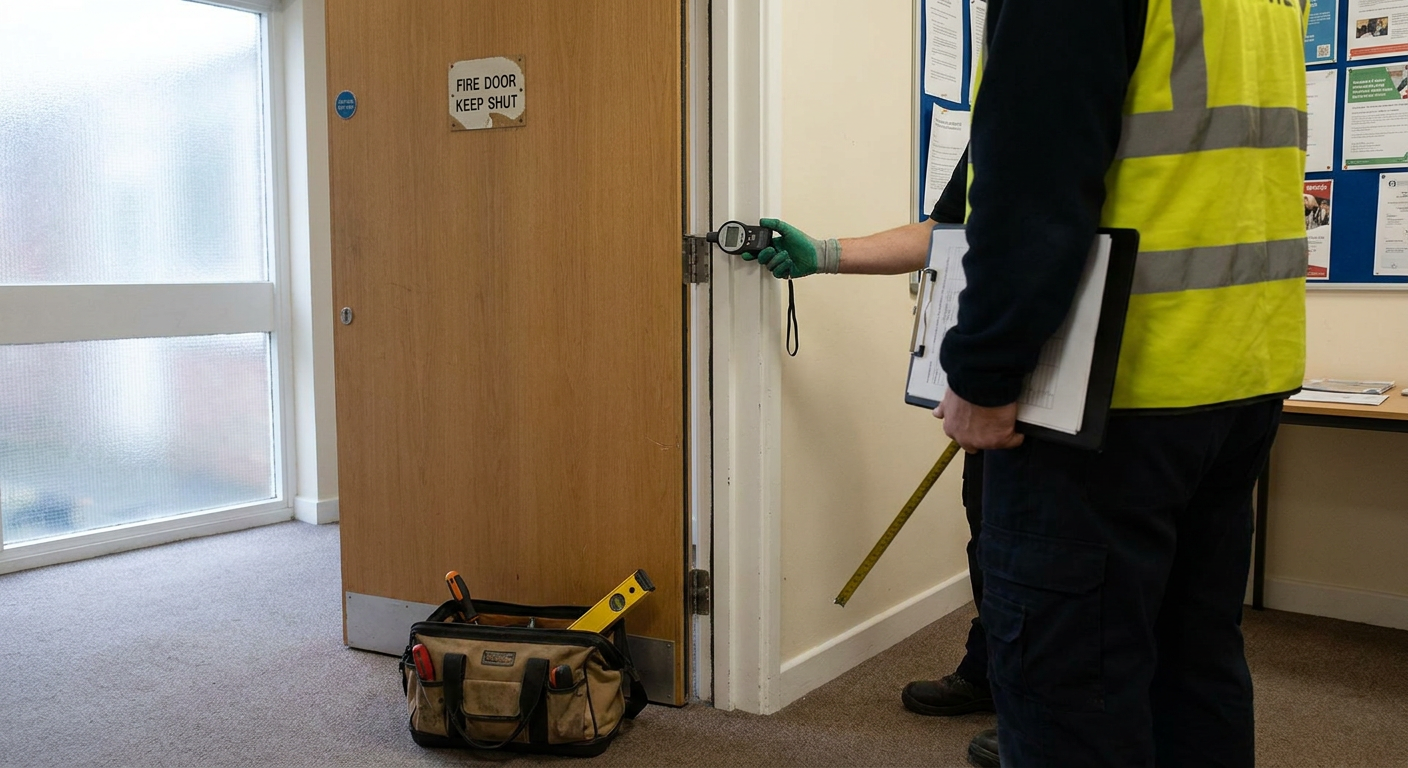
Assessor measuring fire door hinge gap with clipboard and tool bag nearby

Gathering information before you enquire

Knowing how to arrange a fire risk assessment starts with gathering the right facts about your building. The specialist firm carrying out the work will ask for specific information needed before the fire assessment can be booked. Have the address ready, along with the number of storeys, the total count of flats or rooms, and how the building is used. If it is a house in multiple occupation, mention that early, as the requirements differ from a standard block.

You should also note the type of alarm system installed and whether any recent changes have been made to the layout. Finding out when the last assessment took place helps the assessor plan the visit. Check the building log book or ask the managing agent. If no record exists, say so. All of this forms the basis of booking a fire risk assessment in Bexley, so having it written down speeds up the enquiry. For buildings outside the borough, the process is similar, but local knowledge matters. A separate service covers <a href="/areas/dartford">Dartford</a> and another handles <a href="/areas/plumstead">Plumstead</a>.

Who carries out the assessment

The law requires that a competent person completes the work. Who can carry out a fire risk assessment depends on the complexity of the building. For a small office in Bexley, a general fire safety practitioner may be sufficient. For a tall residential block, the responsible person must appoint someone with specific experience in multi-occupied housing. The specialist firms handling these enquiries employ assessors who hold recognised credentials such as NEBOSH Fire Safety qualifications or membership of professional bodies like the Institute of Fire Engineers (IFE) or the Institution of Fire Risk Managers (IFRM). These individuals are trained to examine the structure, the alarm systems, and the escape routes.

If you are unsure who the responsible person is for your building, the rules around that role are set out separately. The duty falls on whoever controls the premises, which might be a landlord, a freeholder, or a managing agent. They hold the legal obligation to ensure the assessment takes place and that any findings are acted upon. Understanding this duty is the first step before arranging any visit.

Access on the day of the visit

A common question is whether access to flats during the fire assessment is required, or if the assessor only needs to see the communal areas. For a standard Type 1 assessment, the specialist examines hallways, stairwells, lobbies, plant rooms, and bin stores. They do not need to enter individual homes. However, they will inspect flat entrance doors from the corridor side to check their condition and self-closing mechanisms. More detail on those door checks is covered in the guidance on <a href="/compliance/fire-door-checks-quarterly">quarterly fire door inspections</a>.

If the building has a more complex history or construction, a higher-level assessment might be recommended, which could involve looking inside a sample of flats. The specialist will explain what the assessor needs on the day when confirming the appointment. Someone with keys to the communal areas, such as a caretaker or managing agent, must be present to let them in and answer questions about maintenance routines.

Receiving the report after the visit

Once the inspection is finished, the specialist compiles the findings into a written document. Fire risk assessment report contents typically include a description of the building, the people at risk, the hazards identified, and the existing safety measures. Each finding is graded by risk level, and the report lists actions with suggested deadlines. You will see clear priorities rather than vague advice.

The report usually arrives within ten working days of the visit. It is sent to the person who commissioned the work. If a managing agent arranged the assessment, they receive the document and are expected to share relevant sections with leaseholders or residents. For landlords operating shared housing, the findings feed directly into licensing conditions. Guidance on <a href="/compliance/hmo-licence-fire-safety-requirements">HMO licence requirements</a> explains how those obligations connect. Keep the report safe, as it forms part of the building records and will be requested during any future review.

Steps to arrange the assessment

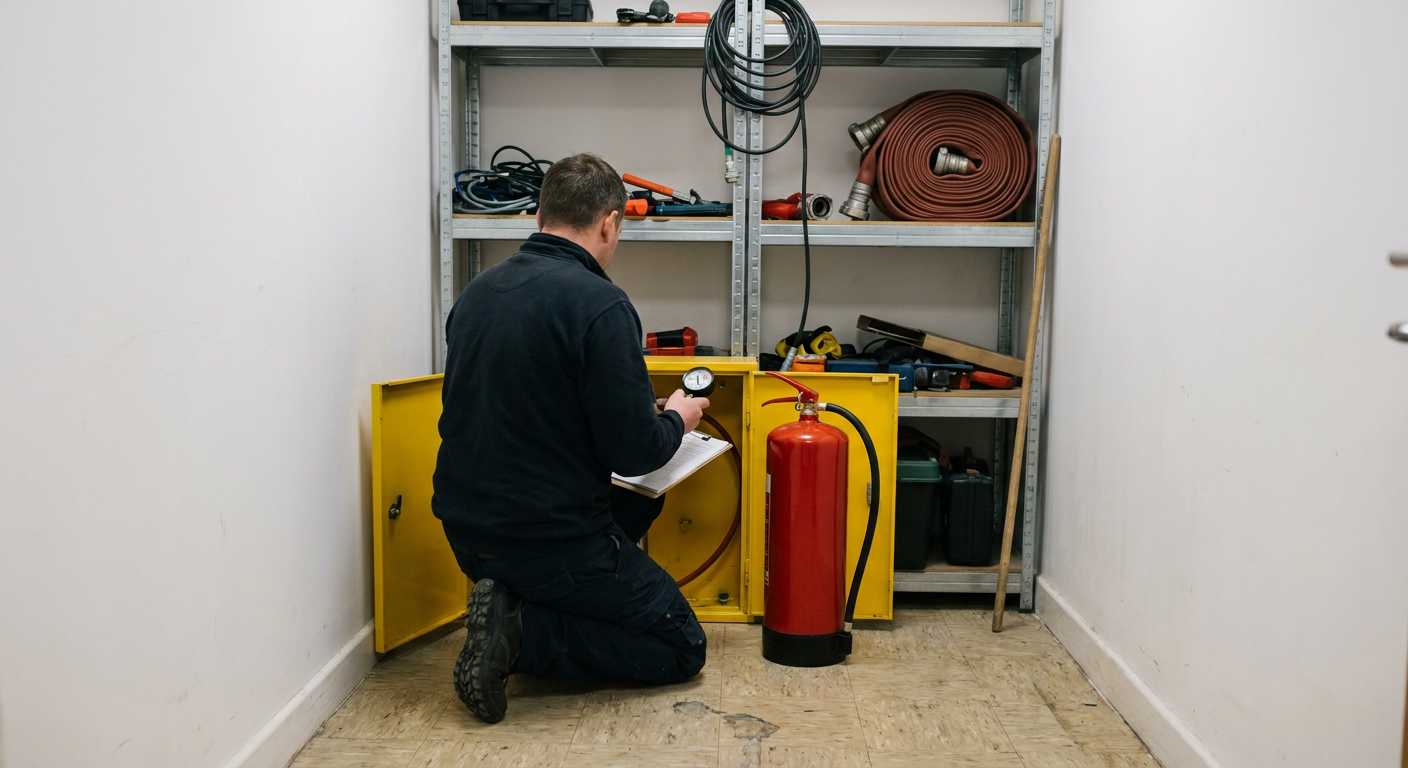
Technician testing pressure gauge on fire extinguisher in storage cupboard
  1. 1

    Collect building details

    Write down the address, storeys, flat count, alarm type, and the date of the last assessment before making contact.

  2. 2

    Submit your enquiry

    Send the gathered details through the contact page so the specialist firm can confirm they cover your building type.

  3. 3

    Agree a date

    The specialist arranges a visit time and confirms who needs to be on site with keys to communal areas.

  4. 4

    Attend the inspection

    The assessor examines corridors, stairs, doors, and plant rooms while the nominated person grants access.

  5. 5

    Receive the report

    The written document arrives within ten working days, listing hazards, actions, and deadlines for the responsible person.

Questions about arranging an assessment

These are the things residents and owners in Bexley ask most often before booking a visit.

What details about my block in Bexley should I have ready?

Note the full address, number of storeys, total flats, alarm type, and building use. Mention any recent alterations. Having this written down before you enquire saves time and avoids delays in scheduling the visit.

How do I find out when the last assessment was done?

Check the building log book or ask the managing agent. If the building changed hands recently, request the records from the previous owner. No record means the specialist will treat it as a fresh assessment.

Does the assessor need to get inside individual flats?

No. A standard Type 1 assessment covers communal areas only. The assessor inspects flat entrance doors from the hallway side. Higher-level assessments might require entry to a sample of flats, but the specialist will state this beforehand.

Who needs to be on site and how long does it take?

Someone with keys to all communal areas must attend, such as a caretaker or agent. For a typical block of flats in Bexley, the visit lasts between one and three hours depending on size.

How soon after the visit does the report arrive?

The specialist firm usually delivers the written report within ten working days of the site visit. It arrives electronically, sent directly to the person who commissioned the work. If a managing agent or leaseholder needs a copy, that distribution is arranged separately once the document is issued.

What does the report look like and will it list actions?

It is a structured document describing the building, hazards found, and current safety measures. Every finding includes a risk rating and a recommended action with a deadline for completion.

Will a managing agent or leaseholder get a copy?

The report goes to whoever booked the assessment. Managing agents typically distribute relevant sections to leaseholders. Residents can request a summary of findings that affect their safety.

What does an assessment for a small Bexley office cost?

Fees depend on floor area, occupancy, and complexity. The specialist firm provides a price once they receive the basic building details. There is no fixed rate across all premises.

Ask about your building in Bexley

Send the details you have gathered. The enquiry goes to a specialist firm covering Bexley, who will reply with next steps. Submitting this form does not commit you to a booking or a fee.

  • No obligation to proceed
  • Local Bexley specialists
  • Clear pricing provided

These details are passed to a specialist, as the privacy page describes.

Sending this costs you nothing. The privacy notice goes into what happens to your details. They reach one independent fire safety specialist covering Bexley, and that specialist may pay us when the enquiry is passed on. Comparing quotations with other firms remains entirely up to you.

Prefer email? Write to hello@bexleyfire.co.uk