Seasonal guide

Winter fire safety checks for your building

Cold weather brings extra risks to managed buildings. Find out what a winter building fire checklist covers, from portable heaters and blocked escape routes to holiday staffing gaps and decorations in communal areas.
Arrange a check

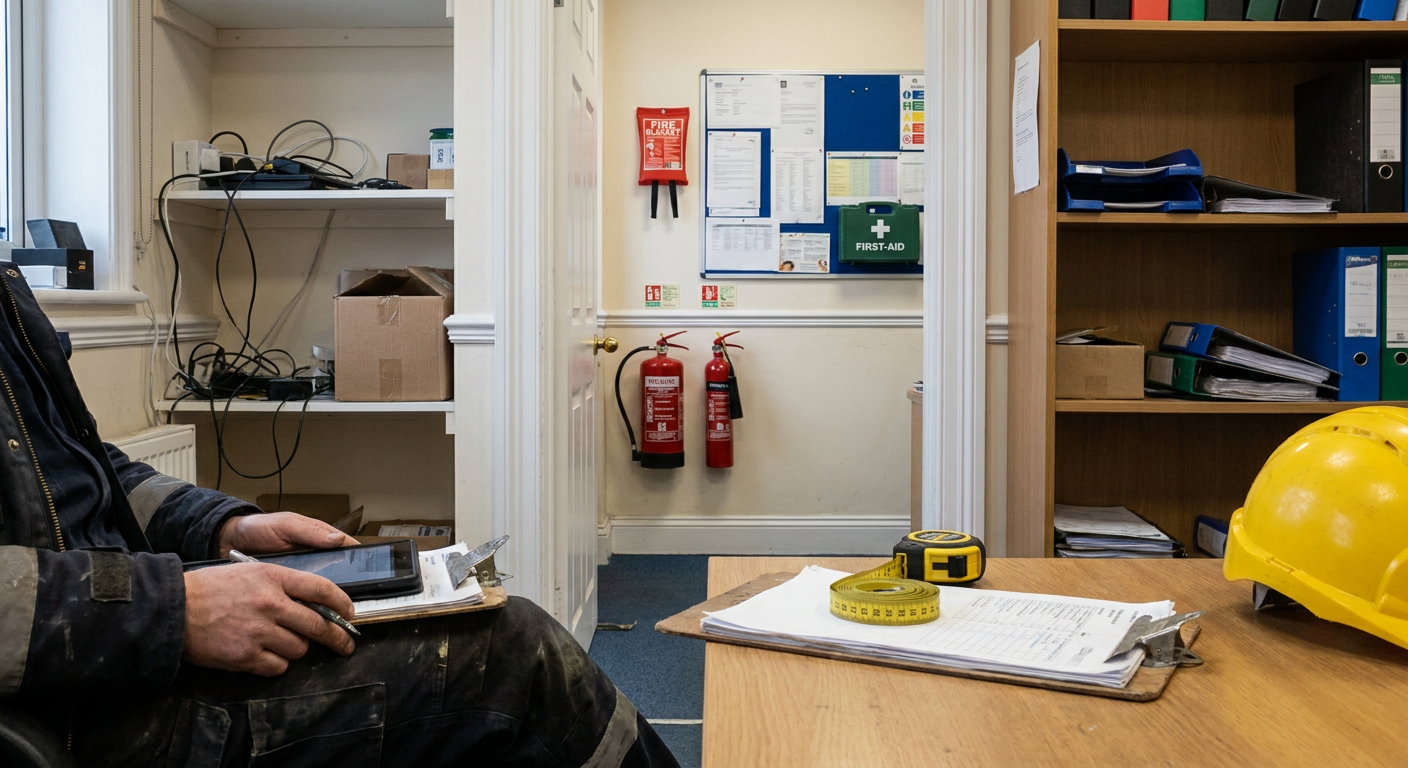
Office area with fire extinguishers, first aid kit and safety documents.
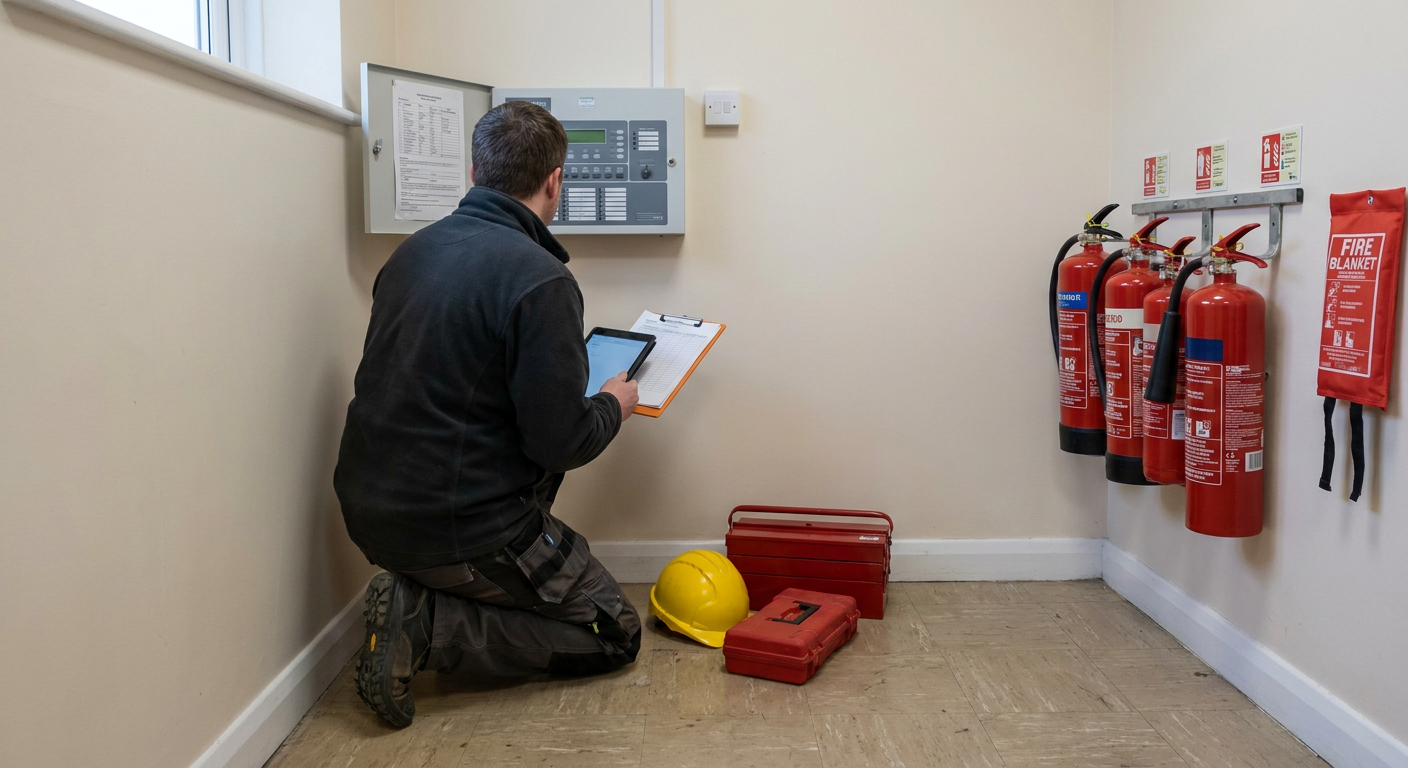
A technician kneels with a clipboard inspecting extinguishers and a fire panel.

Why winter changes the risks in your building

Shorter days and colder temperatures change how people use shared spaces. Residents bring in items that stay put for months, deliveries increase, and routines shift. A winter fire safety checks review looks at these seasonal habits before they become a problem.

In Bexley, blocks of flats and managed homes see the same patterns each year. Corridors fill with things that should be elsewhere. Doors get wedged open against the draught. The person responsible for the building needs to know where the risks sit now, not where they sat in July. Guidance on [who holds that duty](/compliance/who-is-the-responsible-person) sets out the legal position.

A specialist firm can walk through the building and produce a short list of actions tied to what they actually find. That is the basis of a [fire risk assessment in Bexley](/fire-risk-assessment). Getting this done before the holidays means any problems are dealt with while contractors and staff are still available.

Decorations in stairwells and what you can remove

Residents often put up Christmas decorations in communal areas without thinking about the rules. Stairwells and corridors form part of the escape route. Anything hung there adds fuel and narrows the path out. The rules around decorations in stairwells are strict because a fire starting in a lobby or on a landing spreads fast, trapping people above.

If you manage a block, you are allowed to remove items placed in shared escape routes. A polite notice to residents beforehand helps. Explain that communal hallways must remain clear under the terms of their tenancy or lease. You do not need to wait for a complaint to act. A specialist can advise on wording that points to the relevant fire safety regulations rather than sounding like a personal rule.

For buildings covered by the [Fire Safety (England) Regulations 2022](/compliance/fire-safety-england-regulations-2022), keeping common parts free of combustible material is a specific requirement. Removing tinsel, paper chains or small trees from landings is part of meeting that duty. Put a clear notice up telling residents that decorations belong inside their own front doors, not in the stairwell.

Portable heaters and plant rooms

When the heating fails or a flat feels cold, plug-in heaters appear. A portable heater fire risk in a block of flats is high because these units draw heavy current and sit close to furniture, curtains or bedding. In communal areas, they are sometimes left running unattended overnight.

Plant rooms are another concern. Staff or contractors might leave a temporary heater running near pipework or stored materials. These rooms already contain electrical equipment and sometimes gas supplies. Adding an unregulated heat source increases the chance of ignition.

The responsible person should make it clear that portable heaters are not permitted in corridors, lobbies or plant rooms. If residents need extra warmth, the issue belongs with whoever maintains the central heating system. Where heaters are unavoidable inside individual flats, advice on safe placement and automatic cut-off features reduces the danger. A [health and safety report](/health-and-safety-reports) covering the premises will flag these hazards formally so they can be tracked and resolved.

Blocked escape routes and winter storage

Cold months push clutter indoors. Bicycles, prams, bags of recycling and boxes end up on stair landings or inside bin stores that are already full. A blocked escape route caused by storage is one of the most common findings during inspections in Bexley flats.

Bin stores deserve particular attention. Cardboard packaging rises sharply between November and January. Rubbish left outside the designated bins becomes fuel. Read more about how [bin stores and rubbish create a fire risk in Bexley flats](/news/bin-stores-and-rubbish-as-a-fire-risk-in-bexley-flats) to understand why this matters beyond simple tidiness.

Dealing with it requires regular walks of the building and prompt removal of items left in the wrong place. Written notices help, but physical checks catch what residents ignore. If storage space is genuinely lacking, the managing agent or freeholder may need to look at providing secure external options rather than letting corridors absorb the overflow.

Propped doors and cold draughts

Fire doors exist to hold back smoke and flame. Wedging them open defeats their purpose entirely. In winter, residents prop doors to avoid touching cold handles, to let warm air circulate, or to make carrying shopping and parcels easier. Delivery drivers do the same when dropping off multiple packages.

Every propped door breaks the compartmentation of the building. Smoke travels through the gap within minutes of a fire starting. A [compartmentation survey](/compartmentation-survey) checks whether the barriers between flats and corridors remain intact, and a propped door is a temporary failure of that barrier.

[Quarterly fire door checks](/compliance/fire-door-checks-quarterly) are required for many buildings. During winter, increasing the frequency of visual checks catches the habit before it normalises. Self-closing devices must work properly so the door shuts without needing a push. If a closer is stiff or broken, a specialist repairs or replaces it rather than leaving the door to swing freely.

Holiday staffing and alarm checks

Over the Christmas and New Year period, caretakers, concierge staff and managing agents take leave. Buildings that rely on a single person to test alarms or walk the escape routes suddenly have no cover. Holiday period fire safety cover needs planning well before December.

Someone must remain responsible for checking the fire alarm panel, testing emergency lighting and ensuring exits are unlocked. If the usual person is away, a named deputy must know where the log book is and what to record. Guidance on what goes into a [fire safety log book](/news/fire-safety-log-book-for-your-building-what-to-record) keeps the process consistent regardless of who does the work.

Where staffing drops significantly, consider whether the building's evacuation policy needs a temporary adjustment. A [stay put or evacuate policy](/news/stay-put-or-evacuate-fire-policy-in-blocks-of-flats) depends on compartmentation holding, which in turn depends on doors being closed and corridors clear. If no one is present to verify those conditions, the assumptions behind the policy weaken.

Timing your review and getting a walk round done

Waiting until the new year to address winter risks means living with them through the busiest period for fires. Arranging a review before Christmas gives time to act on findings while contractors are still working. Information on [how to arrange a fire risk assessment](/compliance/how-to-arrange-a-fire-risk-assessment) explains the steps involved.

A specialist firm can conduct a targeted walk round of a Bexley block and produce a concise list of actions. This is not a full reassessment if one was done recently, but a seasonal check focused on the issues raised here: heaters, storage, doors, decorations and staffing. It fits alongside existing [fire safety policy documents and procedures](/fire-safety-policy-and-procedures).

For buildings with vulnerable residents, a check also confirms that [personal emergency evacuation plans](/news/personal-emergency-evacuation-plans-who-needs-a-peep) remain workable when support workers are on holiday leave. Taking action now prevents a manageable risk from becoming an incident recorded in the local fire service's call logs.

What shapes the cost of a seasonal building check

Every building differs in size, layout and how it is used, so the work required to assess winter risks varies from one block to the next.
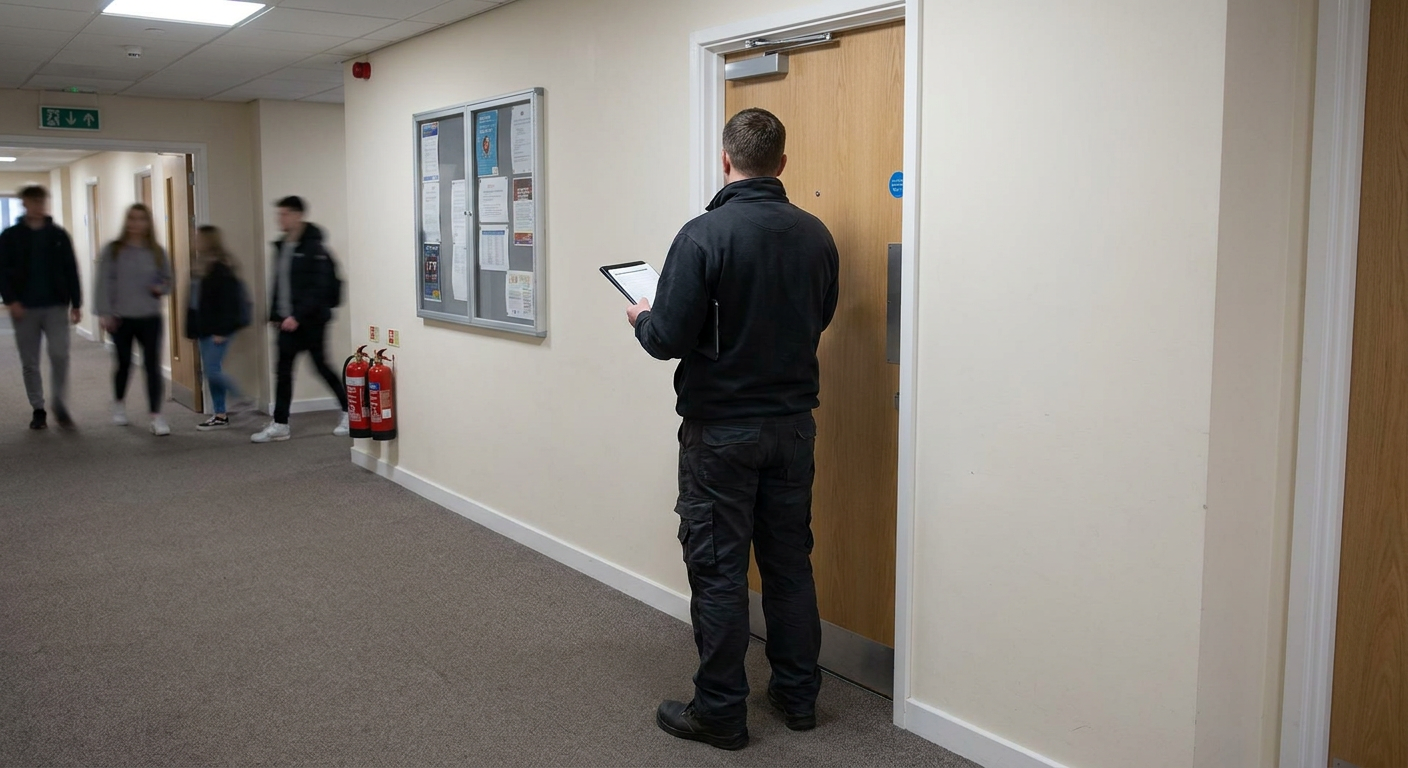
A man with a clipboard checks a fire door in a corridor as students walk by.
Number of floors and flats
More dwellings and levels mean longer inspection times and a larger number of doors and routes to check.
Existing documentation
Buildings with up-to-date plans and log books require less groundwork before the physical walk round begins.
Staffing arrangements
Sites relying on temporary holiday cover need additional coordination to ensure access and information handover.
Complexity of escape routes
Multiple staircases, basement levels or mixed-use sections add time to trace and verify each exit path.

The specialist firm explains the cost of the particular job before anything is agreed.

Full reassessment or a seasonal walk round

Deciding between a complete review and a shorter visit depends on when the last assessment took place and what has changed since.

Full reassessmentSeasonal walk round
Scope of inspectionFull reassessmentCovers every element of fire safety across the whole building in detail.Seasonal walk roundFocuses only on winter-specific risks such as heaters, storage and decorations.
When it suits bestFull reassessmentDue when the previous assessment has expired or major works have taken place.Seasonal walk roundUseful as an interim check between scheduled reviews during colder months.
Documentation producedFull reassessmentResults in a formal report that updates the fire risk record for the premises.Seasonal walk roundProduces a short list of targeted actions tied to seasonal observations.
Time on siteFull reassessmentTakes longer because all compartments, systems and routes are examined fully.Seasonal walk roundQuicker to complete since it addresses a defined set of winter concerns.

A specialist advises which option suits after looking at the building and its records.

Ask about a winter check for your building

Send details about your building and what you have noticed. The enquiry goes to a specialist firm who will respond with what they suggest. It does not commit you to booking anything.

  • No obligation to proceed
  • Local Bexley specialists
  • Plain advice first

These details are passed to a specialist, as the privacy page describes.

Sending this costs you nothing. The privacy notice goes into what happens to your details. They reach one independent fire safety specialist covering Bexley, and that specialist may pay us when the enquiry is passed on. Comparing quotations with other firms remains entirely up to you.

Prefer email? Write to hello@bexleyfire.co.uk