Student housing

Student accommodation fire safety in Bexley

Find out what a specialist assessor records during a student let fire safety check, how cluster flats differ from shared houses, and what the responsible person must keep on file for halls across Bexley.

Arrange an assessment

Row of buildings under a cloudy sky.
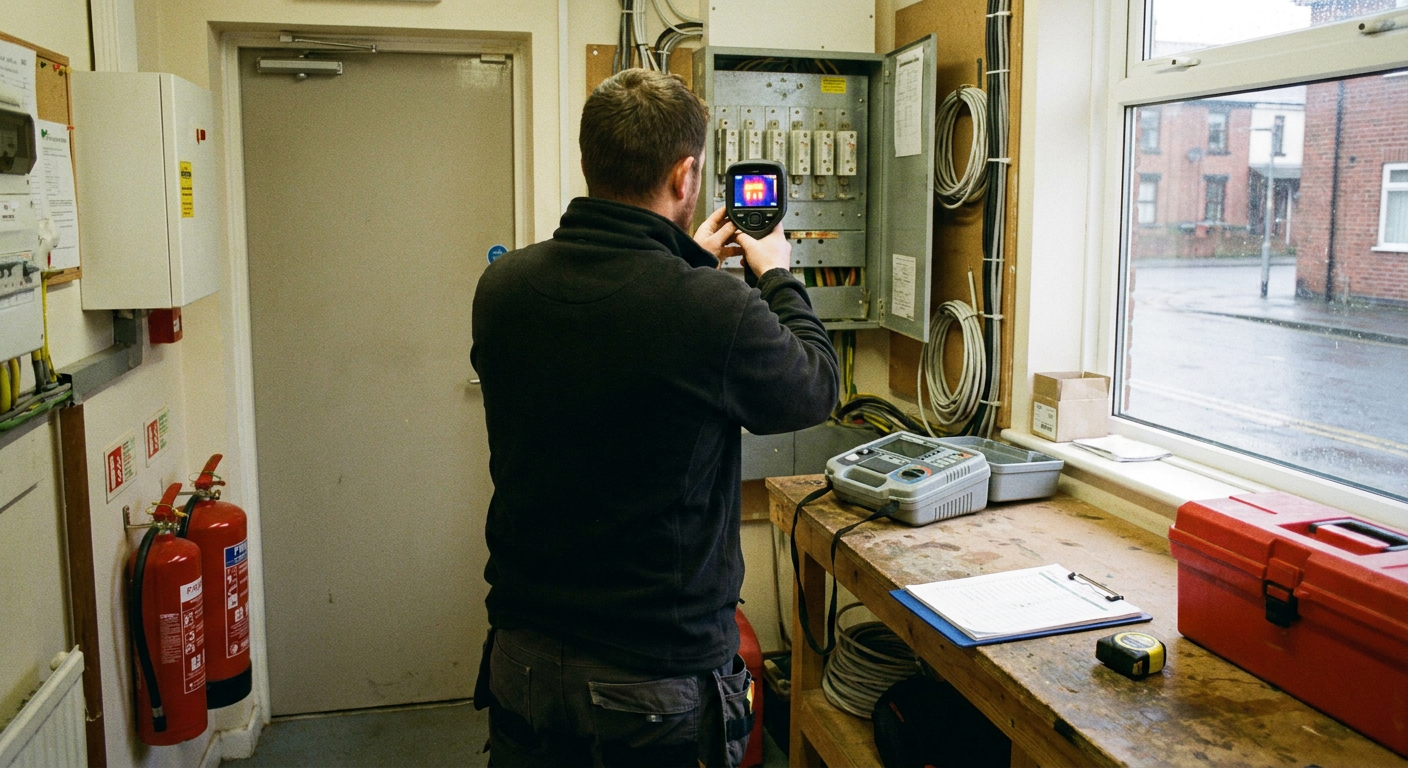
Technician uses a thermal camera on an electrical panel near fire extinguishers.

Cluster flats and shared student houses in Bexley

A cluster flat fire risk survey treats each bedroom as a private room opening onto a shared kitchen and living space. A shared student house operates differently. Because residents use a single staircase and often lack protected lobbies, the [HMO fire risk assessment](/hmo-fire-risk-assessment) looks at the whole building as one escape route. The assessor examines the stairs, the final exit, and any doors separating sleeping areas from the main circulation space. Purpose built student housing fire precautions follow another pattern, usually relying on a stay-put or simultaneous evacuation policy depending on the compartmentation standard achieved during construction. In every case, the report sets out what needs fixing and who is responsible for doing it. Managers of student accommodation in Bexley receive a document that names specific hazards rather than offering generic advice.

Kitchens, cooking appliances and ignition sources

Shared kitchens generate most of the fires in student accommodation. The assessor records the type of cooker installed, noting whether hobs have automatic shut-off devices or if they rely entirely on students remembering to turn them off. Microwave placement matters too, because units stacked above eye level lead to spills that can ignite packaging.

Extractor fans and filters are checked for grease build-up. A clogged filter in a busy student kitchen becomes fuel within weeks of term starting. The specialist firm also looks at how waste bins are positioned relative to heat sources, and whether combustible items like tea towels hang near rings.

Electrical sockets in kitchens draw attention because students frequently plug multiple high-draw appliances into extension leads. The report notes where fixed socket numbers fall short of demand, since overloaded adaptors cause electrical fires. Each observation ties back to a specific action the manager can take before the next intake arrives.

High turnover and induction gaps between terms

Student populations change completely every year, sometimes every semester. A fire drill in student accommodation scheduled during freshers week reaches everyone, but students arriving late miss it entirely. The assessor records how the management team handles these gaps, looking for evidence of catch-up inductions or digital briefings sent to new arrivals.

The [responsible person](/compliance/who-is-the-responsible-person) must ensure every resident understands the alarm sound, the escape routes, and the assembly point. When turnover is high, relying on a single annual briefing leaves months where half the building does not know what to do. The specialist firm checks whether written instructions sit inside bedroom doors and whether wardens repeat drills mid-term.

Managers in Bexley who run large halls often stagger inductions across the first three weeks. The report evaluates whether this approach actually reaches everyone or simply creates a paper exercise that ignores late enrolments.

Separate assessments for individual blocks

Each distinct block requires its own assessment. Two buildings joined by a covered walkway are separate structures for fire purposes, because smoke and flame travel differently through open links than through solid walls. The assessor treats each block as its own zone, recording its specific escape routes, alarm panels, and compartmentation standards.

A [compartmentation survey](/compartmentation-survey) might be recommended if the blocks share services such as ventilation ducts or cable risers that could allow fire to spread between them unseen. The specialist firm maps these connections and notes where barriers are missing or damaged.

For managers overseeing several buildings across Bexley, separate reports mean separate action plans. This prevents confusion about which maintenance team handles which defect. The [fire strategy](/fire-strategy) document ties the individual block reports together, showing how the whole site functions during an emergency.

Alarm testing records across halls of residence

A halls of residence fire assessment places heavy weight on the alarm log book. The specialist firm asks to see weekly test records, checking that each call point and sounder has been activated in rotation over a set period. Missing entries suggest the tests did not happen, or happened without anyone writing them down.

The assessor verifies that the alarm panel shows no unresolved fault signals. A panel displaying a persistent trouble light means part of the system is offline, and students in that zone will not hear the warning. [Equipment testing advice](/fire-safety-equipment-testing-advice) covers what the maintenance contractor should record after each service visit.

Battery backups for alarm systems receive particular scrutiny in older halls where power cuts are more frequent. The report notes whether batteries hold enough charge to run the full system for the required duration, and when they were last replaced.

Fire doors and the problem of wedging

Students wedge fire doors open constantly. It happens in corridors, stairwells, and kitchen entrances. The assessor records every propped door found during the visit, because each one breaks the compartmentation that keeps smoke out of escape routes. A [fire door inspection](/fire-door-inspection) checks the self-closing mechanism, the intumescent strips, and the gap around the frame.

Shared student house fire doors face the same abuse, often with heavier traffic and fewer staff to correct it. The specialist firm looks for signs of long-term wedging: scuff marks on the floor, damaged hinges from doors being forced past their closers, or stripped screws where magnetic holders were removed.

Solutions recorded in the report include installing approved magnetic door holders linked to the alarm system, so doors release automatically when the bell sounds. The assessor also notes where signage is missing or ignored, recommending clearer warnings placed at eye level.

Related services

What the specialist firm covers for student lets
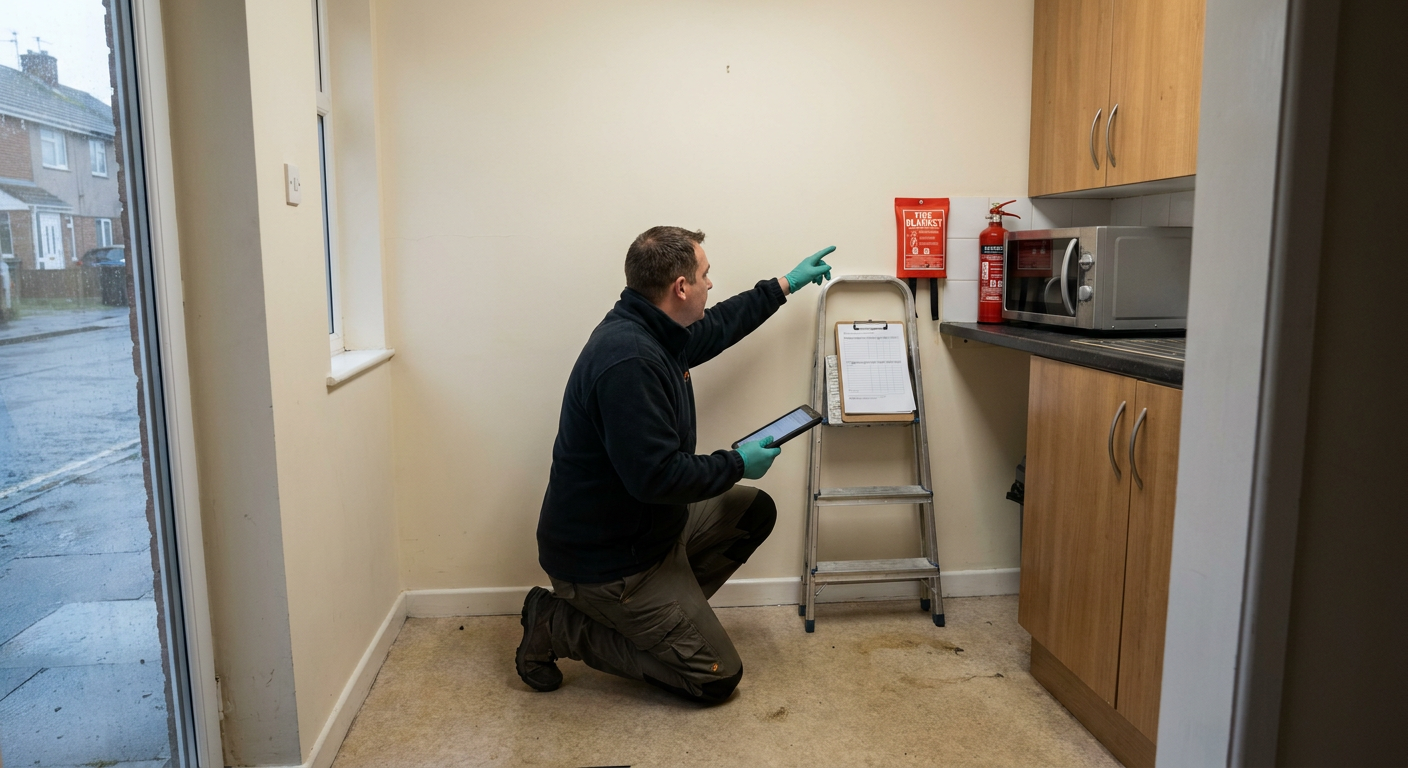
Fire safety officer points to a smoke alarm near a stepladder in a small kitchen.
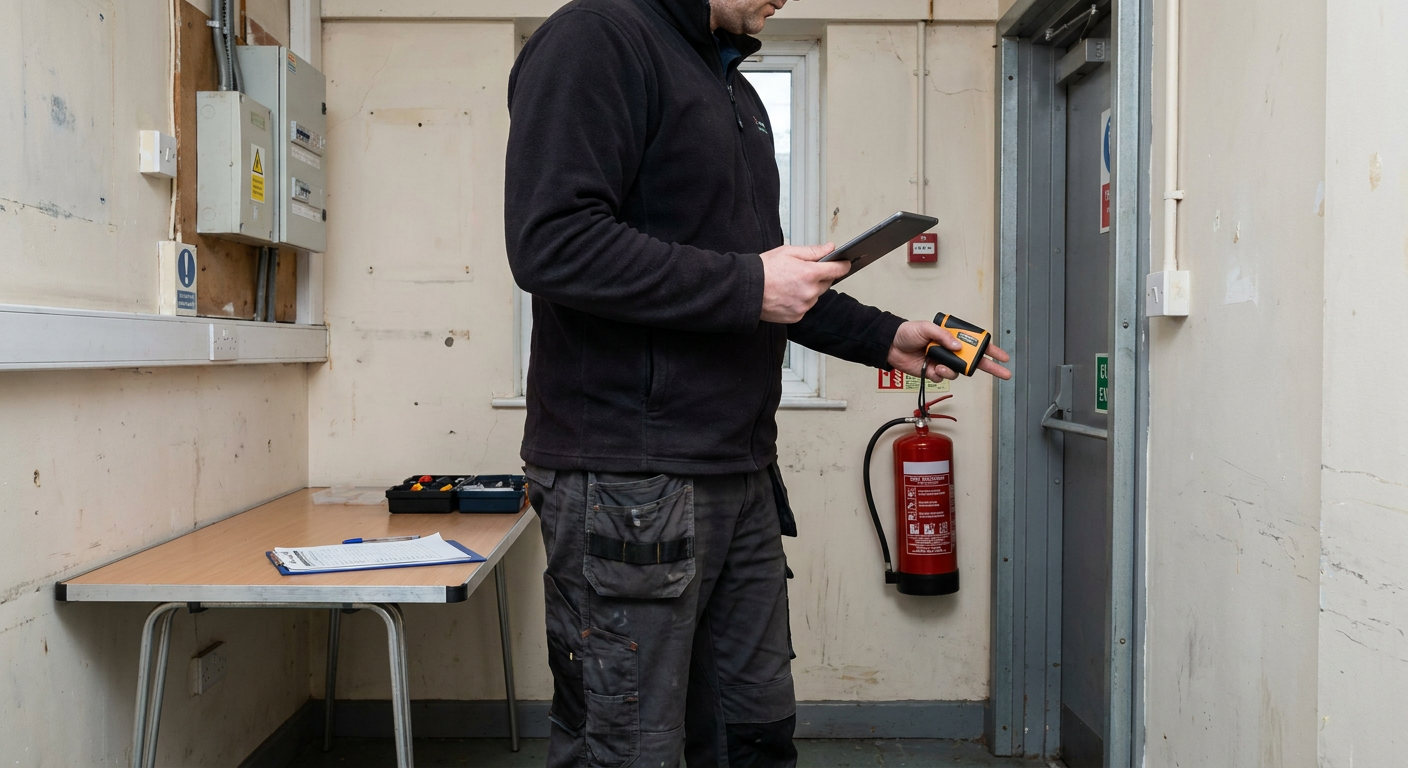
Technician with tablet and thermal device checks a fire extinguisher near a lift door
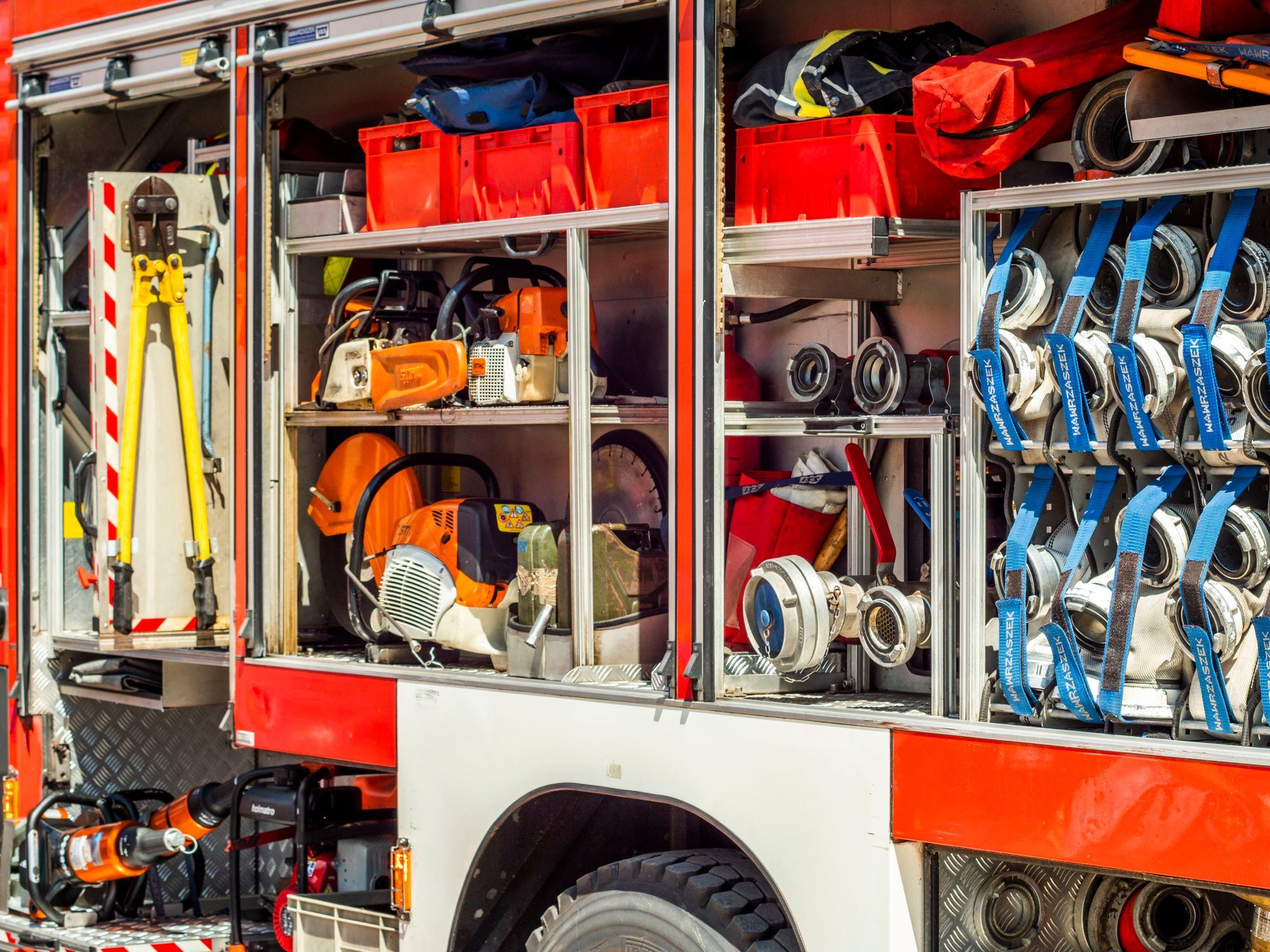
Close-up of a firetruck compartment with hoses and tools.

Evacuation planning

The specialist firm drafts [evacuation plans](/fire-evacuation-plans) mapping escape routes for each floor, accounting for students with limited mobility.

People crossing a pedestrian lane during daytime.

Staff training

[Warden training](/fire-warden-training) prepares hall managers and student reps to sweep floors and direct people out safely during an alarm.
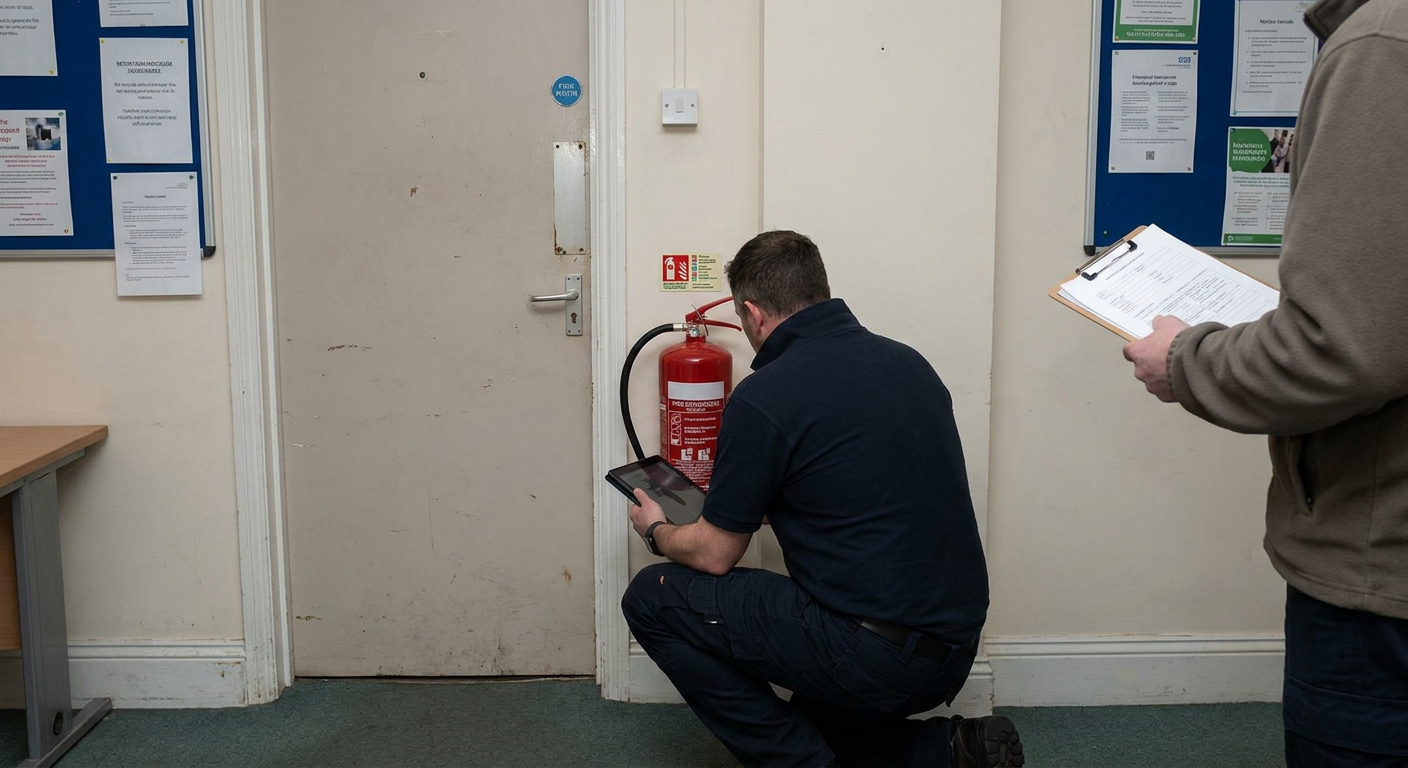
Technician kneeling by a fire extinguisher checking equipment with tablet.

Policy documents

Written [policy and procedures](/fire-safety-policy-and-procedures) give staff a clear reference for daily checks, reporting faults, and managing drills.
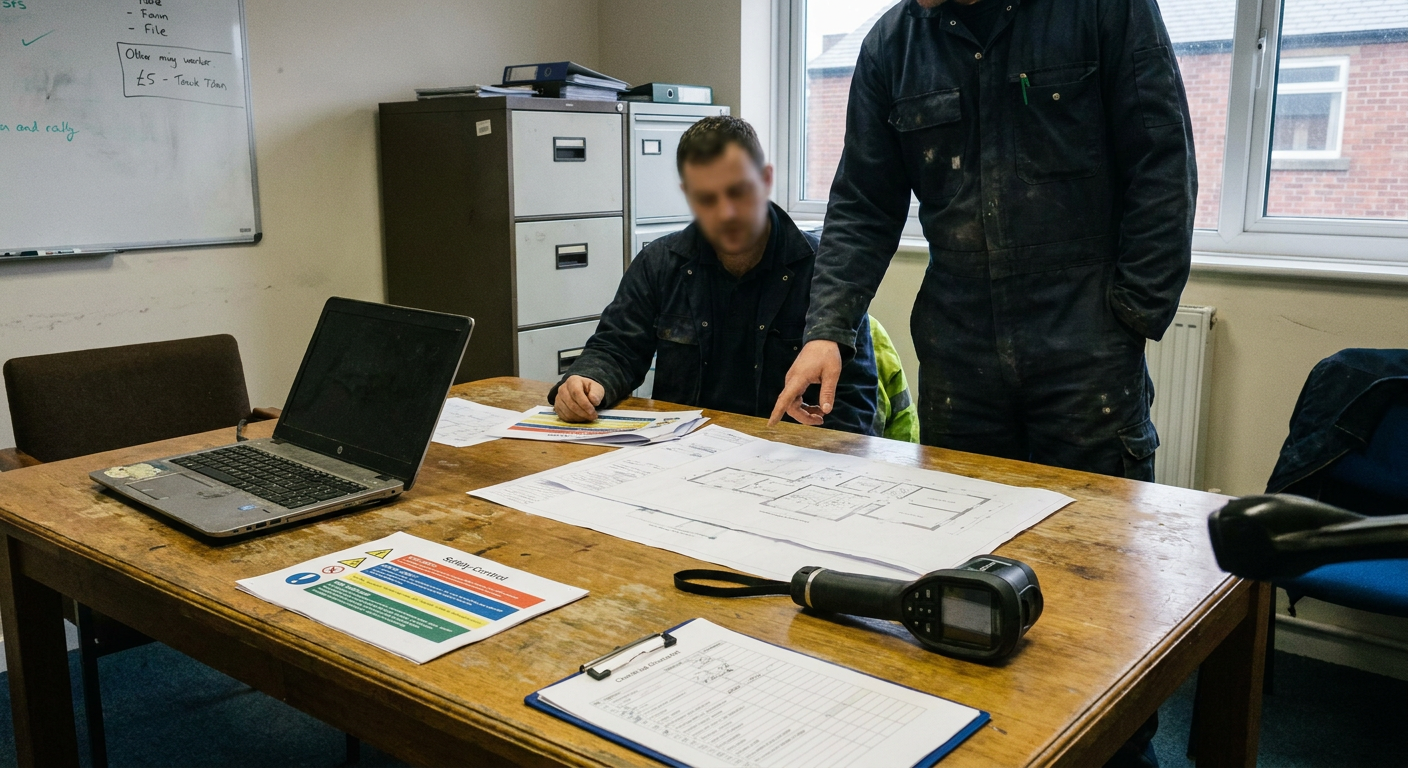
Two workers reviewing building plans on a table with safety equipment.

Health and safety reports

Broader [premises checks](/health-and-safety-reports) cover trip hazards, blocked exits, and lighting failures that compound fire risks in busy corridors.

Questions about student accommodation fire safety

Common points raised by managers arranging assessments for halls and shared lets in Bexley.

Timing the visit around vacations
Yes, the specialist firm can arrange the visit during vacation periods when rooms are empty and access is straightforward.
Handling missed inductions
The assessor records your catch-up process and recommends digital briefings for students arriving after freshers week.
Recording kitchen appliance risks
The report notes cooker types, extractor condition, socket loads, and bin placement relative to heat sources.
Block-by-block assessments
Each separate structure needs its own report, even if buildings are linked by covered walkways or shared services.
Testing alarms in large halls
The specialist firm reviews weekly test logs, fault records, battery backup capacity, and panel status during the visit.
Stopping students wedging doors
The report recommends magnetic holders linked to the alarm, better signage, and regular corridor patrols by trained staff.

Ask about fire safety for your student building

Send details about your halls or shared lets in Bexley. The enquiry goes to a specialist firm who will reply with what they need to quote for the work. There is no obligation to proceed.

  • No obligation
  • Local to Bexley
  • Specialist firms only

These details are passed to a specialist, as the privacy page describes.

Sending this costs you nothing. The privacy notice goes into what happens to your details. They reach one independent fire safety specialist covering Bexley, and that specialist may pay us when the enquiry is passed on. Comparing quotations with other firms remains entirely up to you.

Prefer email? Write to hello@bexleyfire.co.uk