Bexley guide

Council fire safety letter: what to do next

A notice from the council, fire authority or lender means something specific must happen. Find out what each document demands, which survey answers it, and how long you have to act.
Fire risk assessments

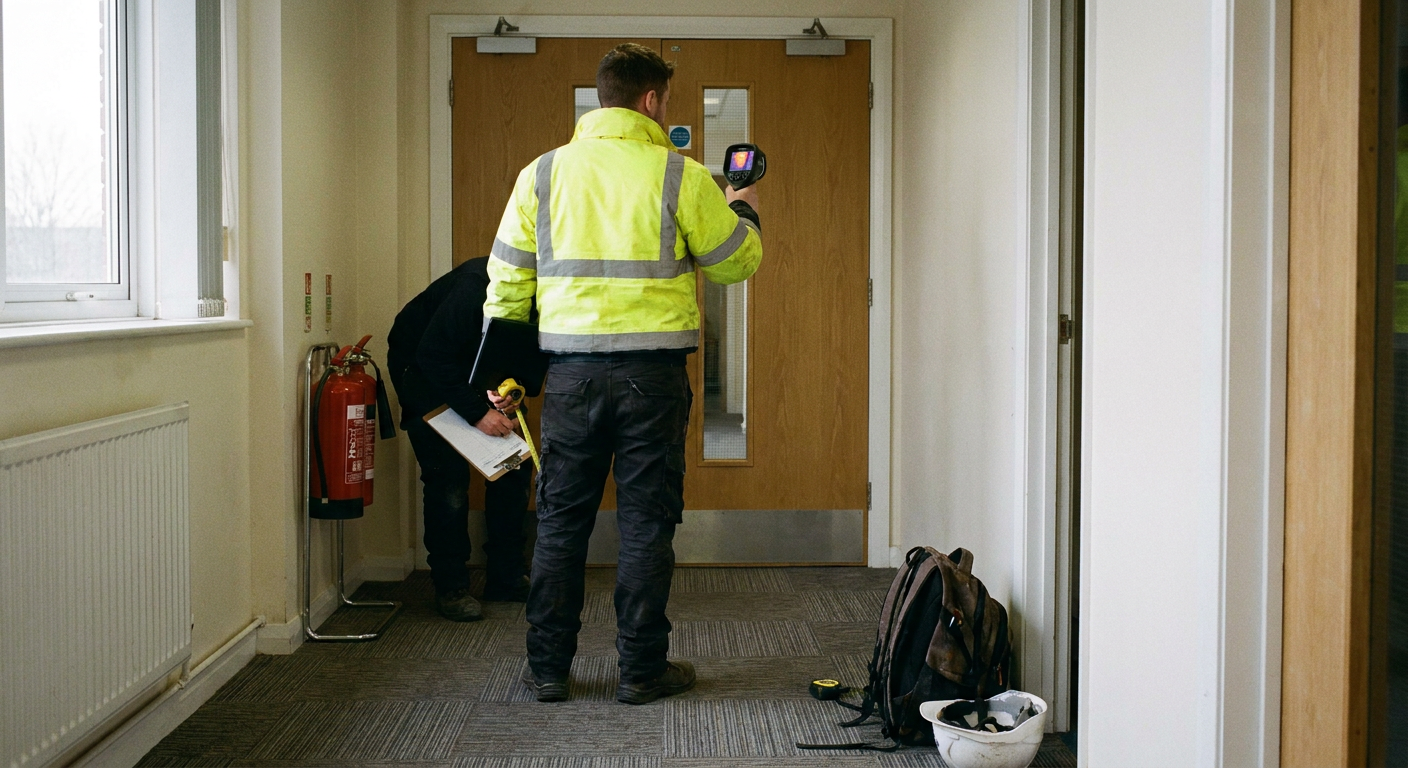
Worker using a thermal imaging device near a fire door in a corridor.
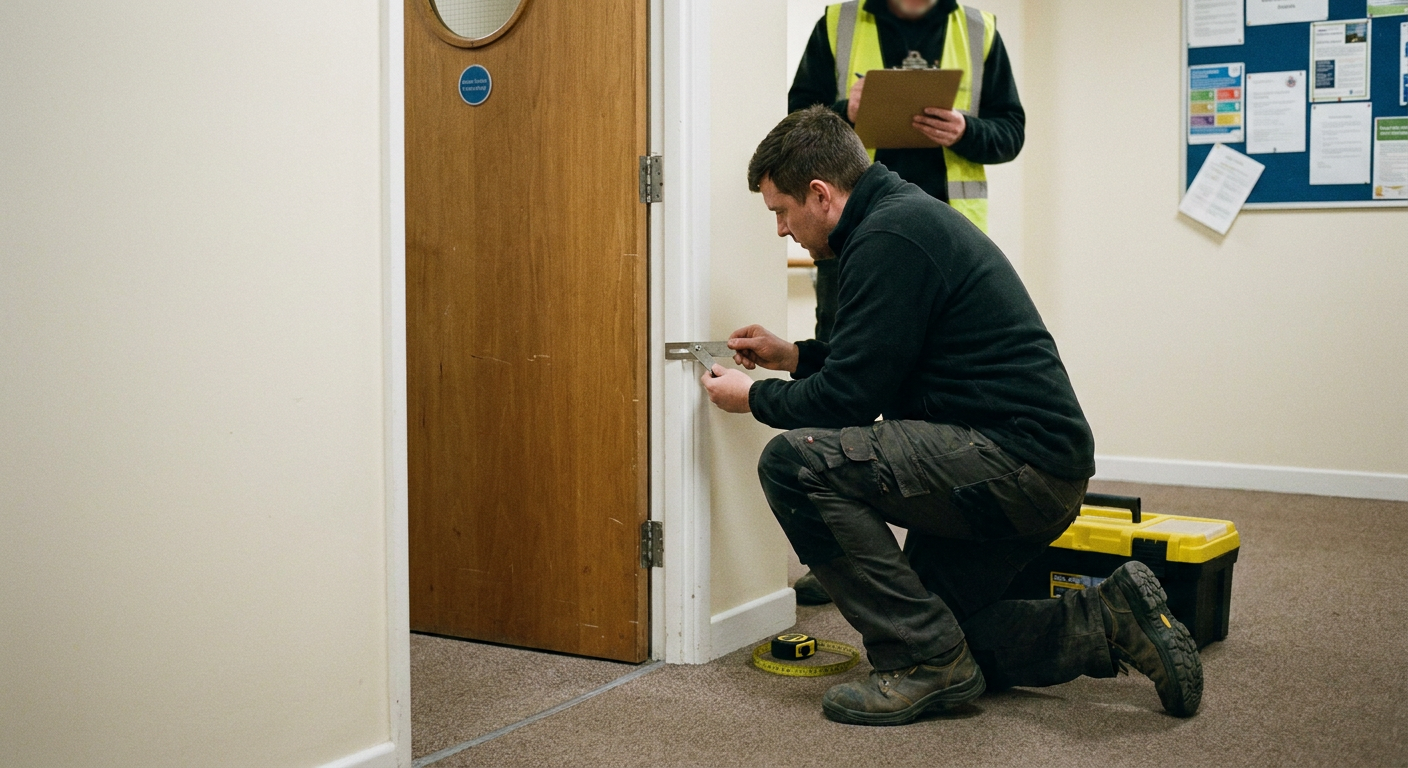
Two workers inspecting a fire door frame with a measuring tool and clipboard.

Reading the council fire safety letter you received

A council fire safety letter arrives without warning, usually by recorded delivery. In Bexley, these documents come from the local housing team, the fire authority, or sometimes a mortgage lender. The first thing to establish is whether you are holding an enforcement notice or an informal advisory letter.

An enforcement notice carries a legal deadline. It names the exact breaches found during a previous visit and sets a date by which they must be fixed. Missing that date can lead to prosecution or a prohibition notice on flats, meaning residents cannot legally occupy the building until the danger passes. An informal letter, by contrast, suggests improvements without threatening immediate legal action. Treat both seriously, but understand the difference in urgency.

If you are wondering about a fire enforcement notice and what next steps to take, read the document carefully before calling anyone. Note the reference number, the issuing body, and the deadline. These details determine exactly which type of assessment or remedial work the specialist firm will need to carry out.

The difference between a schedule of works and a letter

A schedule of works lists every physical task required to bring a building back to a safe standard. It might specify replacing door hinges, sealing pipe penetrations, or installing new emergency lighting. Each item has a measurable outcome. A simple letter might just state that the premises are non-compliant and require attention.

When you receive a schedule of works for fire safety, the items are rarely equal in importance. Some address immediate life safety risks, such as blocked escape routes or missing compartmentation. Others concern record-keeping or signage. You do not always have to complete everything at once. A fire strategy report can help prioritise the most urgent tasks first.

If you want to respond to a fire safety notice properly, send evidence that the highest-risk items are already being addressed. The enforcing officer needs to see progress, not perfection, especially where structural repairs take time. Specialist firms in Bexley handle this sequencing regularly, starting with the hazards that pose the greatest threat to people sleeping in the building.

Which survey answers what the notice asks for

The document you received dictates the type of work required. If an insurer wants a fire risk assessment before renewal, they need the same core document the council requires: a systematic review of ignition sources, fuel, escape routes, and the people at risk. That single report often satisfies multiple parties.

A fire brigade inspection letter in Bexley frequently points to problems with doors or walls. If the issue is doors failing to close fully or lacking intumescent strips, a fire door inspection covers it. If smoke travels between rooms through gaps around pipes or ducts, a compartmentation survey identifies exactly where the barriers have failed.

For shared houses, the licensing team may demand an HMO fire risk assessment alongside proof of working alarms and proper door hardware. Blocks of flats fall under different rules, particularly since the Fire Safety (England) Regulations 2022 changed expectations around external walls and flat entrance doors. Matching the right survey to the specific demand avoids paying twice for overlapping work.

Deadlines, extensions and the cost of delay

An enforcement notice states its deadline clearly, typically twenty-eight days from the date of service. That period is strict. If you have an enforcement notice with a deadline approaching and the works will take longer, you must apply for an extension before the original date expires. Waiting until after the deadline removes your leverage entirely.

Extensions are granted when you can prove the work is genuinely underway but physically impossible to finish in time. Booking a specialist firm early and showing the scheduled dates supports that application. Ignoring the letter or replying late invites escalation. The authority can issue a prohibition notice, restrict access to parts of the home, or begin prosecution proceedings.

You should reply to the fire authority promptly, even if you have not yet booked the assessment. Acknowledging receipt and stating your intended course of action shows cooperation. Silence is interpreted as indifference. Once you have instructed a specialist firm, forward their appointment confirmation to the case officer handling your file.

Steps after receiving a notice

Fire extinguisher and hose reel signage on a blue wall.
  1. 1

    Read the notice thoroughly

    Identify the issuing body, the reference number, the specific breaches listed, and the exact deadline for compliance.

  2. 2

    Acknowledge receipt in writing

    Reply to the authority confirming you have received the document and intend to address the issues raised within the timeframe.

  3. 3

    Establish the correct survey

    Determine whether the breaches require a risk assessment, door inspection, compartmentation survey, or another specific report.

  4. 4

    Instruct a specialist firm

    Book the necessary work with a firm operating in Bexley and obtain written confirmation of the appointment date.

  5. 5

    Submit evidence of progress

    Send the completed report or proof of scheduled works to the enforcing officer before the stated deadline passes.

What determines the scope of the work

Every building differs in layout, age, and use. The notice itself defines the minimum requirement, so the amount of work depends entirely on what was found and what must change.

Size of the building
More floors and rooms mean more doors to inspect, more barriers to check, and a longer assessment overall.
Type of notice served
A full enforcement notice demands detailed evidence, whereas an informal letter might only require a basic review.
Age and construction method
Older homes in Bexley often lack modern compartmentation, requiring more extensive investigation to find hidden voids.
Number of occupants
Houses in multiple occupation and blocks of flats need evacuation plans and specific checks that single-family homes do not.
Urgency of the deadline
Tight timeframes limit scheduling flexibility, which affects how quickly a specialist firm can attend and report.

The specialist firm will explain the full cost of the required work before any agreement is made.

Send your enquiry about the notice

Describe the document you received and the deadline printed on it. Your message goes to a local firm that takes enquiries for specialists across Bexley. Sending it does not commit you to any work or payment.

  • No obligation to proceed
  • Local Bexley coverage
  • Clear next steps provided

These details are passed to a specialist, as the privacy page describes.

Sending this costs you nothing. The privacy notice goes into what happens to your details. They reach one independent fire safety specialist covering Bexley, and that specialist may pay us when the enquiry is passed on. Comparing quotations with other firms remains entirely up to you.

Prefer email? Write to hello@bexleyfire.co.uk