Fire door guide
Quarterly fire door checks in blocks of flats
Find out what the routine check regime means for communal and flat entrance doors, what counts as a fail, and when a full inspection by a specialist is the sensible next step.
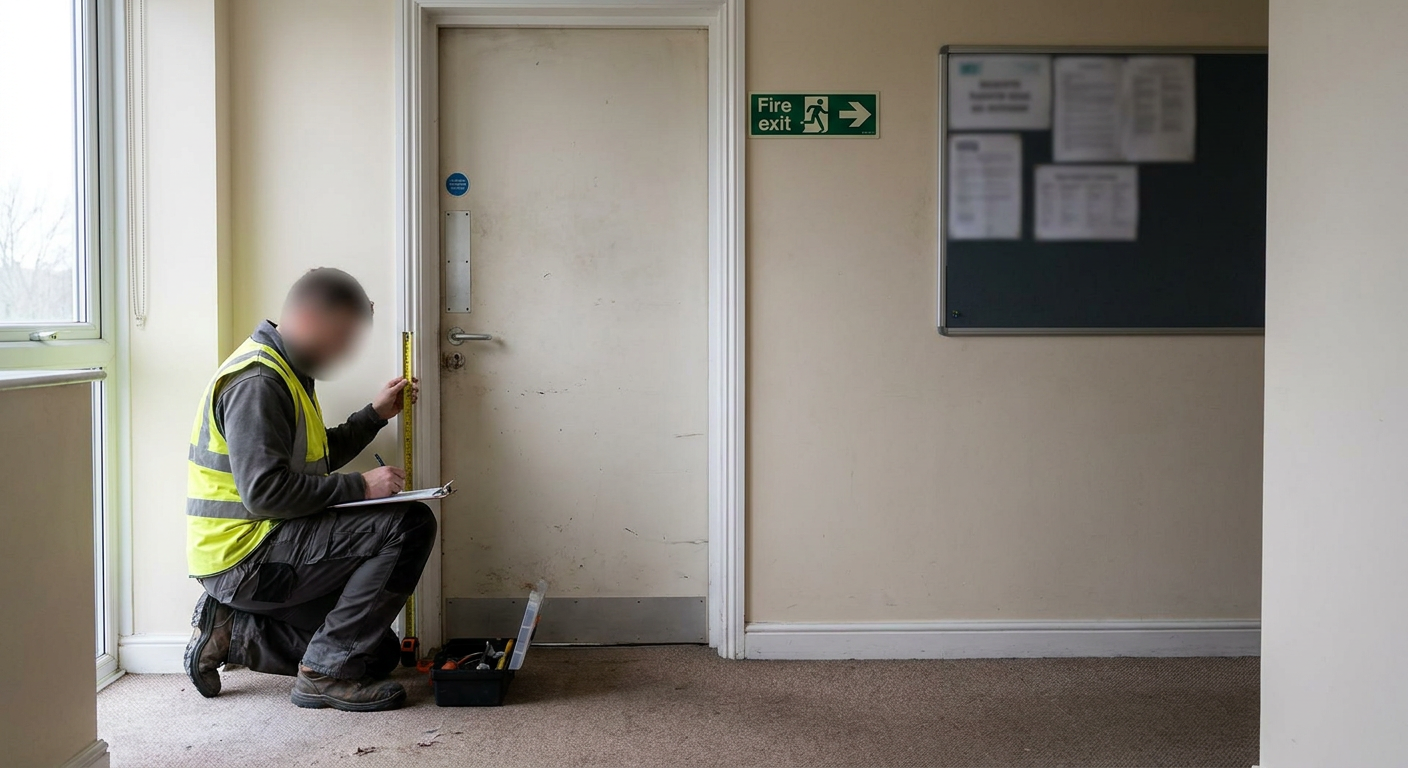
What quarterly fire door checks mean for your building
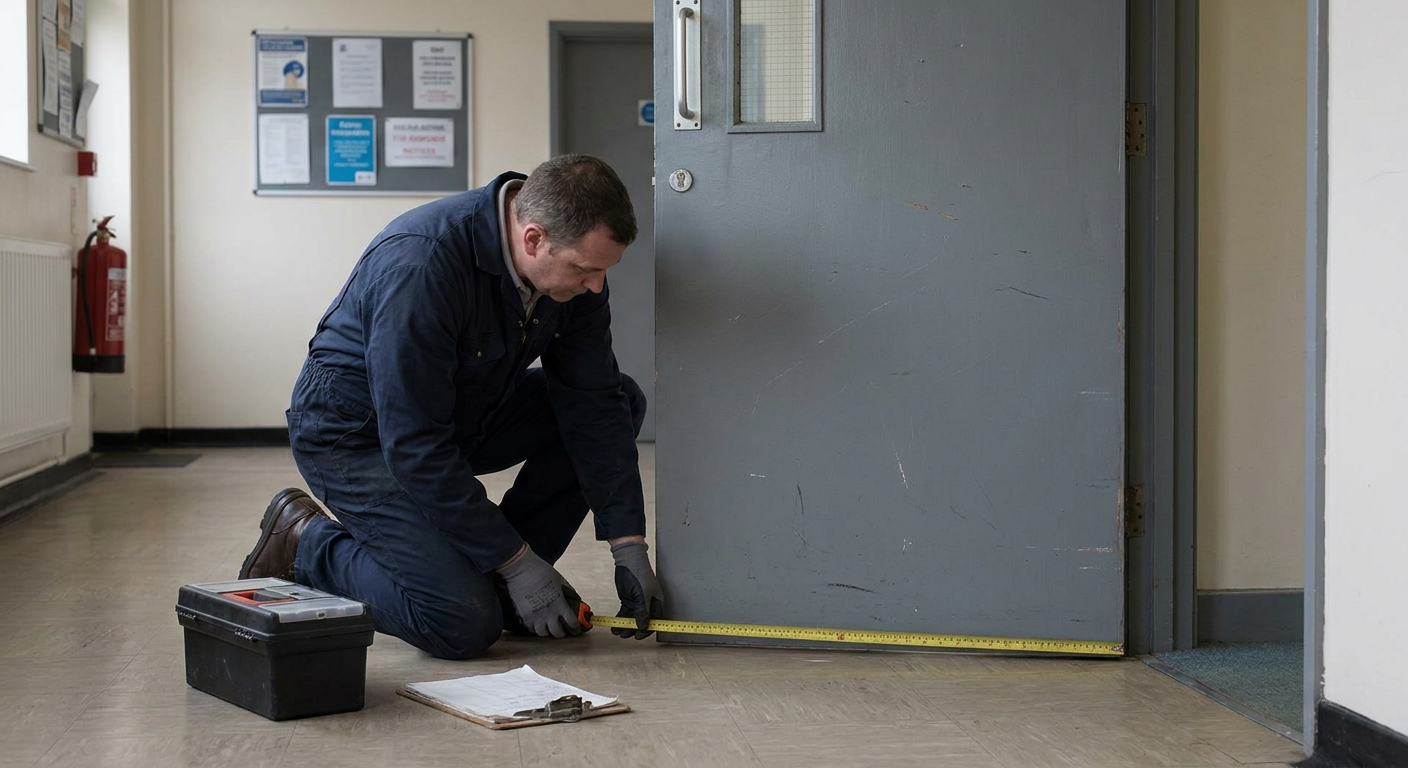
What affects the cost of fire door work
Every building differs in layout, age, and door type, so the amount of work required changes from job to job.
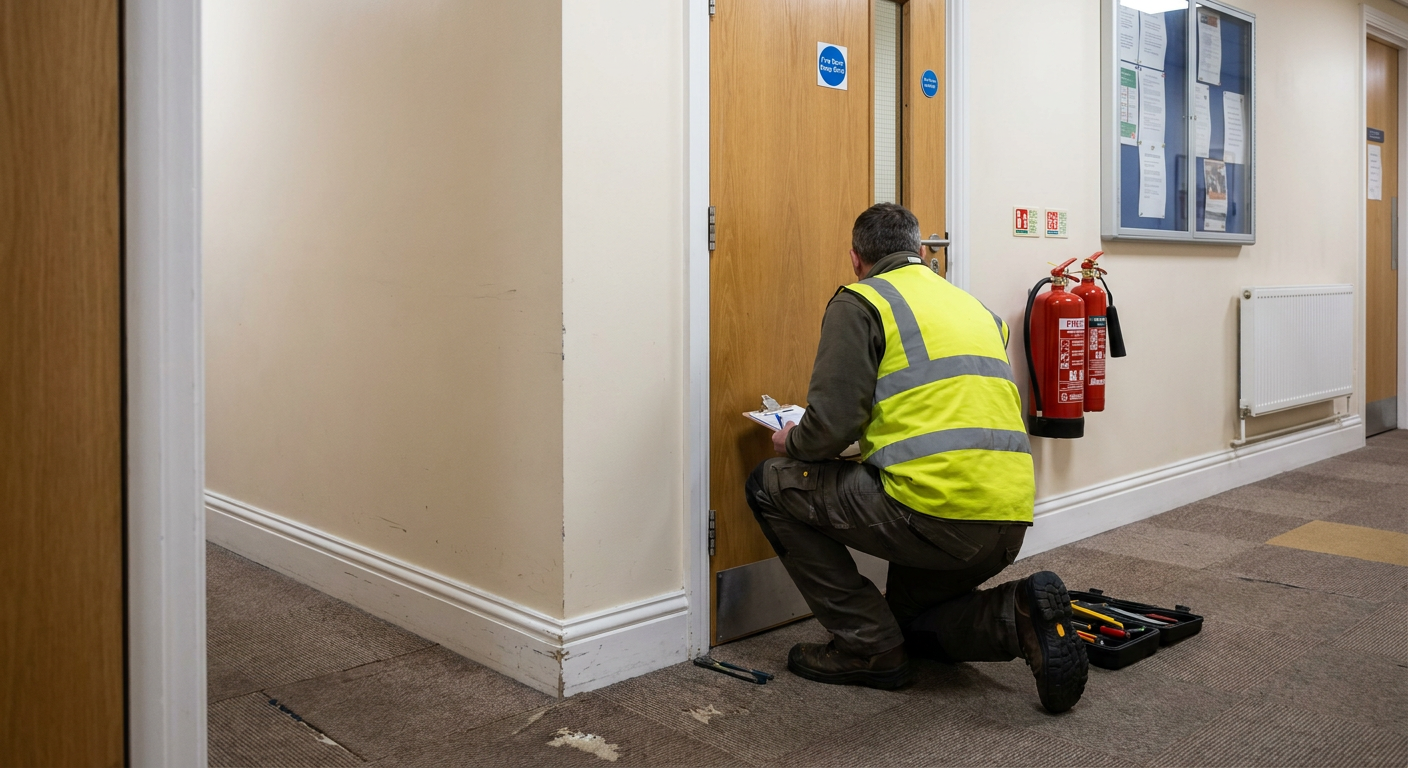
- Number of doors
- More doors take longer to inspect or repair, increasing the time the specialist spends on site.
- Door type and certification
- Fire doors require specific replacement parts that match the original test evidence.
- Access arrangements
- Gaining entry to occupied flats takes coordination, especially if residents work during the day.
- Extent of damage
- Replacing a closer is quicker than fitting a new door leaf and frame into an existing opening.
The specialist explains the cost of the particular job before anything is agreed.
Questions about routine fire door checks
Do quarterly checks apply to flat entrance doors or just communal doors?
They apply to both, but the frequency differs. Flat entrance doors in blocks over 11 metres require quarterly checks. Communal doors in those same buildings need monthly checks. In lower-rise blocks, the legal requirement for quarterly flat entrance door checks does not apply, though regular monitoring remains good practice.
What counts as a fail on a routine check, and can it wait?
A door fails if it does not self-close fully, has damaged seals, cracked glass, or excessive gaps. Minor wear might allow a short delay for parts. A door that stays open or will not latch poses an immediate risk and must be addressed straight away.
Who in the building is allowed to carry out the quarterly check?
The responsible person or someone acting on their behalf can do it. There is no formal qualification required for the visual check, but the person must know what a compliant door looks like. If you are unsure who can check fire doors safely, seek guidance before starting.
What do I need to write down and keep for each door?
Record the date, door location, inspector name, pass or fail status, and any defects found. Note the remedial action taken or planned. Store these records in the building log book so they are available if requested by enforcement authorities.
Residents will not let me inspect their entrance door, what then?
Explain the legal duty and the safety risk. Write to them formally. If access is still refused, document every attempt. Seek legal advice, as the responsible person retains liability for the building's safety regardless of individual cooperation.
When should I stop doing routine checks and book a full door inspection?
Book a full inspection when routine checks reveal repeated failures, widespread damage, or uncertainty about whether the doors meet their original certification. A specialist firm carries out detailed assessments that go beyond visual monitoring.
Does a gap round the door edge mean the door has to be replaced?
Not always. If the door gap tolerance for a fire door is exceeded slightly, adjustment or new seals might resolve it. Large gaps caused by warping or frame movement usually require replacement of the leaf, the frame, or both.
How do these checks fit with the annual check in a low rise block?
Low-rise blocks under 11 metres do not have the same quarterly legal mandate for flat entrance doors, but the responsible person must still maintain fire safety. Annual checks or more frequent monitoring form part of meeting that broader duty.
Get advice on fire door checks in Bexley
Send details about your building and what you have noticed. The enquiry goes to a specialist firm who handles fire door work in Bexley. Sending a message does not commit you to booking anything.
- No obligation to proceed
- Local Bexley specialists
- Clear next steps