About us

Fire risk assessor in Bexley: who runs this site

Bexleyfire takes enquiries about fire risk management from people who own or run buildings in the borough. A separate specialist firm carries out the assessments, inspections and training.
Services in Bexley

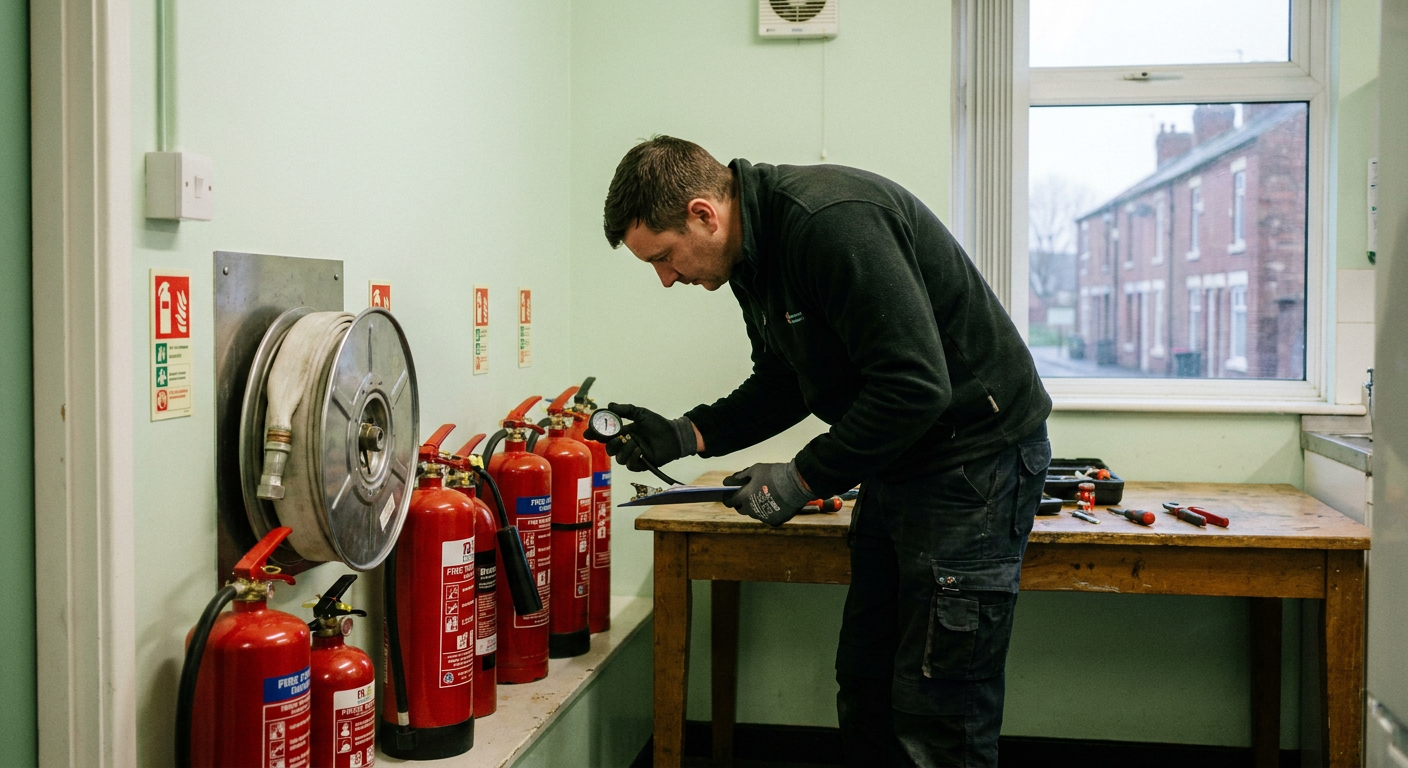
Technician inspects a row of fire extinguishers and a hose reel in a utility room.
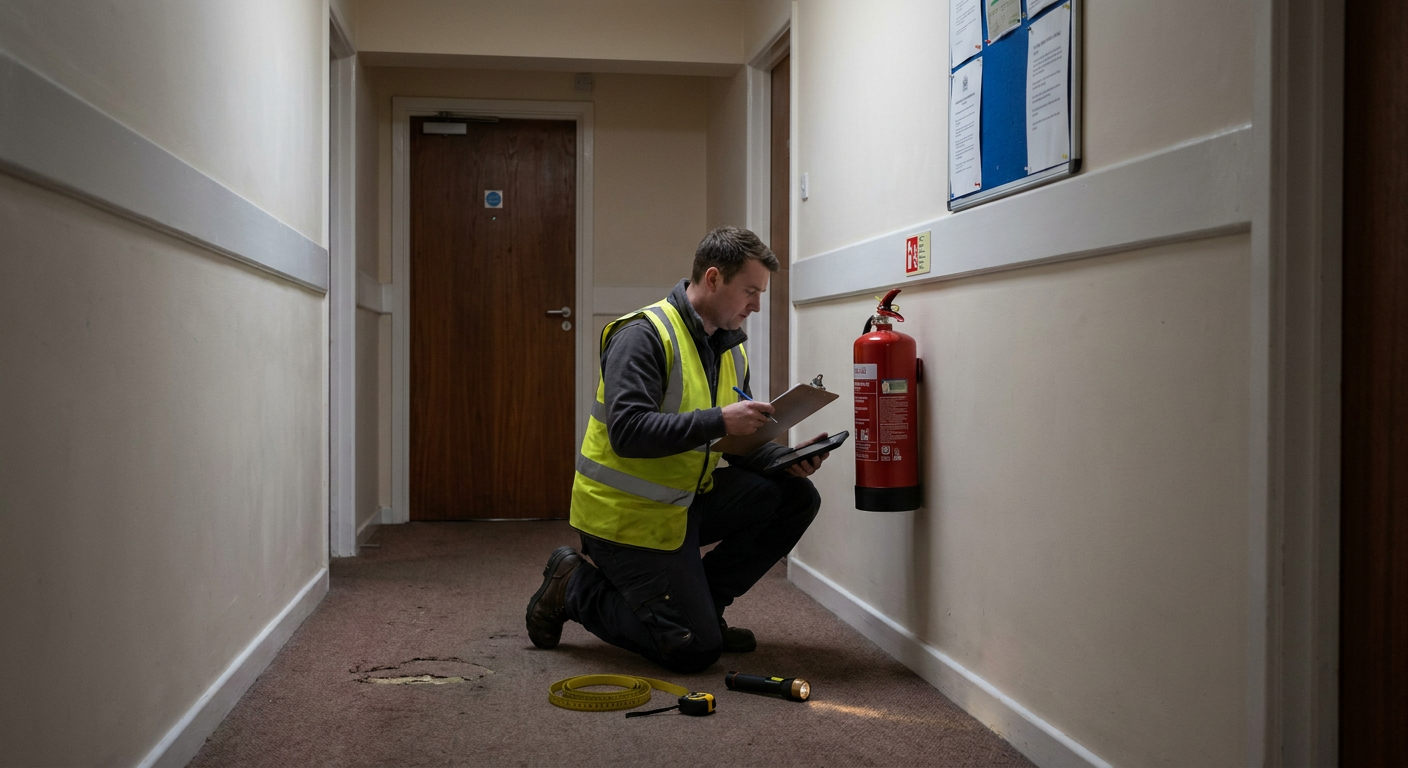
Fire safety officer kneels in a hallway checking a wall-mounted extinguisher.

Taking enquiries for fire risk management in Bexley

Bexleyfire receives enquiries from people who manage homes, flats and workplaces across the borough. Someone notices a problem with a fire door, receives a letter from the council, or realises they need a written assessment to meet their legal duties. They send the details here.

The work itself is carried out by a separate specialist firm. That firm employs the assessors who visit the building, inspect the doors, test the compartmentation and write the reports. Bexleyfire does not perform these tasks. The role is to take the initial enquiry and pass it to the firm that does the work.

This covers everything from a [fire risk assessment](/fire-risk-assessment) in a single house to a [compartmentation survey](/compartmentation-survey) in a block of flats. If you manage an HMO, the same process applies to an [HMO fire risk assessment](/hmo-fire-risk-assessment). Every enquiry starts in the same place.

What happens after you get in touch

Once an enquiry arrives, the details go to the specialist firm. An assessor reviews what has been sent and decides which service fits the building. A block of flats might need a [fire strategy report](/fire-strategy), while a shared house might only require updated [evacuation plans](/fire-evacuation-plans).

The assessor then contacts the person who made the enquiry directly. They arrange a time to visit the building and explain what the inspection involves. You can read more about [what happens during a fire risk assessment](/the-assessor/the-process-bexley) before the visit takes place.

If the building needs staff trained, the specialist firm provides [fire safety awareness training](/fire-safety-awareness-training) or [fire warden training](/fire-warden-training). For landlords dealing with licensing conditions, there is specific guidance on [HMO licence fire safety requirements](/compliance/hmo-licence-fire-safety-requirements). The specialist firm handles all of this directly once the enquiry reaches them.

Buildings and areas covered

The specialist firm works across Bexley. Enquiries come from owners of converted houses, purpose-built blocks, student accommodation and commercial premises. Student halls have particular rules, and the firm handles [student accommodation fire safety](/student-accommodation-fire-safety) as a distinct part of its work.

Some enquiries arrive because a resident has spotted a hazard. Rubbish left in corridors is a common one, and there are notes on [bin stores and rubbish as a fire risk](/news/bin-stores-and-rubbish-as-a-fire-risk-in-bexley-flats). Others follow a notice from the local authority, where the next steps depend on understanding a [council fire safety letter](/compliance/council-fire-safety-letter-what-to-do).

The firm also operates just outside the borough when asked. Work extends to [Dartford](/areas/dartford) and [Plumstead](/areas/plumstead), following the same process. Wherever the building stands, the specialist firm sends an assessor who knows the regulations that apply to that type of home or workplace.

Documents, policies and ongoing duties

A fire risk assessment produces a written record. But many buildings need more than a single report. The specialist firm drafts [fire safety policy documents and procedures](/fire-safety-policy-and-procedures) so that everyone in the building knows what to do if an alarm sounds.

Landlords and managing agents often need help understanding their legal position. The law places duties on a specific individual, and knowing [who the responsible person is](/compliance/who-is-the-responsible-person) determines who must act on the findings. Some buildings appoint a nominated person to handle day-to-day checks, a role the specialist firm supports through its [nominated person service](/nominated-person-service).

Assessments expire. The frequency depends on the building type and how it is used. Guidance on [when a fire risk assessment needs reviewing](/compliance/how-often-fire-risk-assessment-reviewed) helps avoid gaps in compliance. For buildings subject to newer rules, the [Fire Safety (England) Regulations 2022](/compliance/fire-safety-england-regulations-2022) set additional requirements, particularly around quarterly checks on flat entrance doors.

How an enquiry becomes a completed job

Every piece of work follows the same sequence, from the first message to the final report delivered to the building owner.
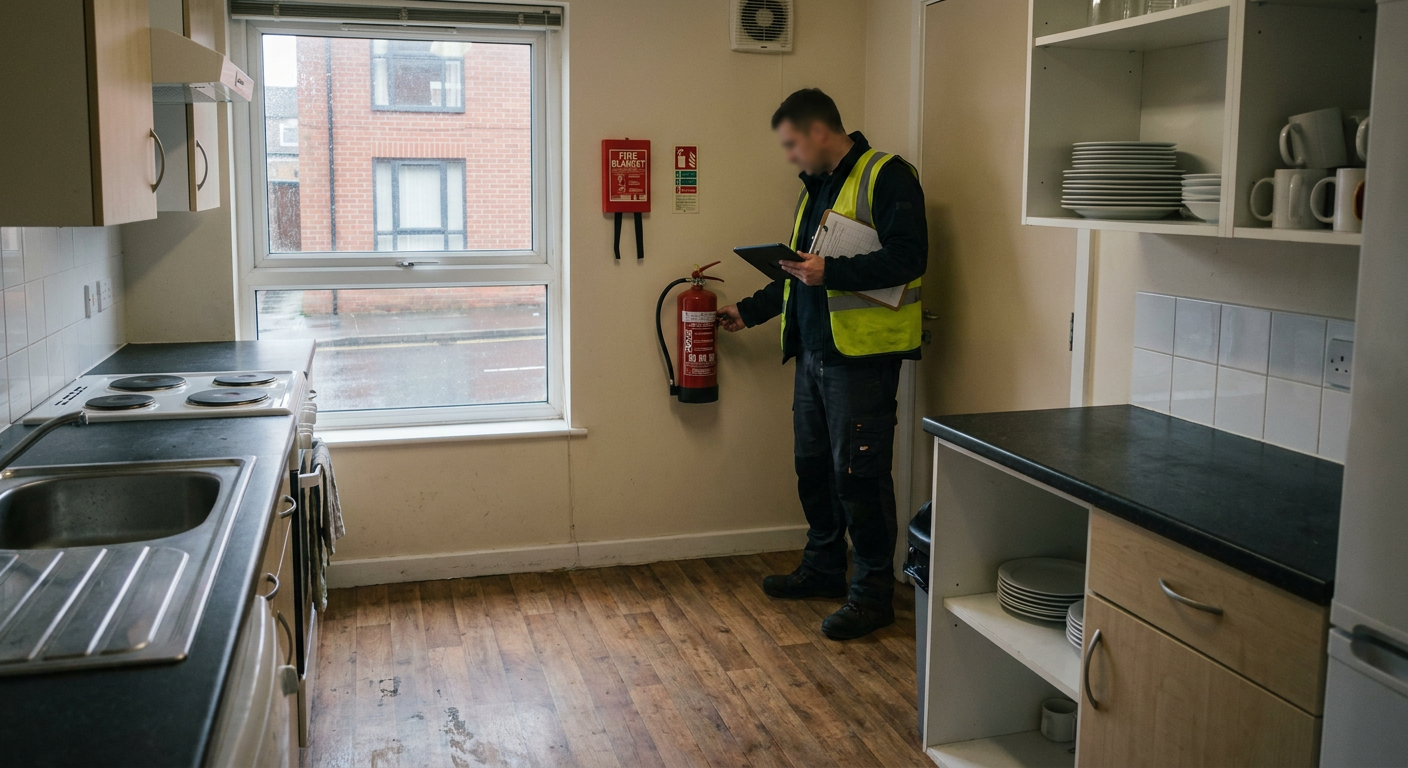
  1. Fire safety officer checks a wall-mounted extinguisher in a shared kitchen.

    Enquiry received

    Details about the building and the problem are logged and passed to the specialist firm.
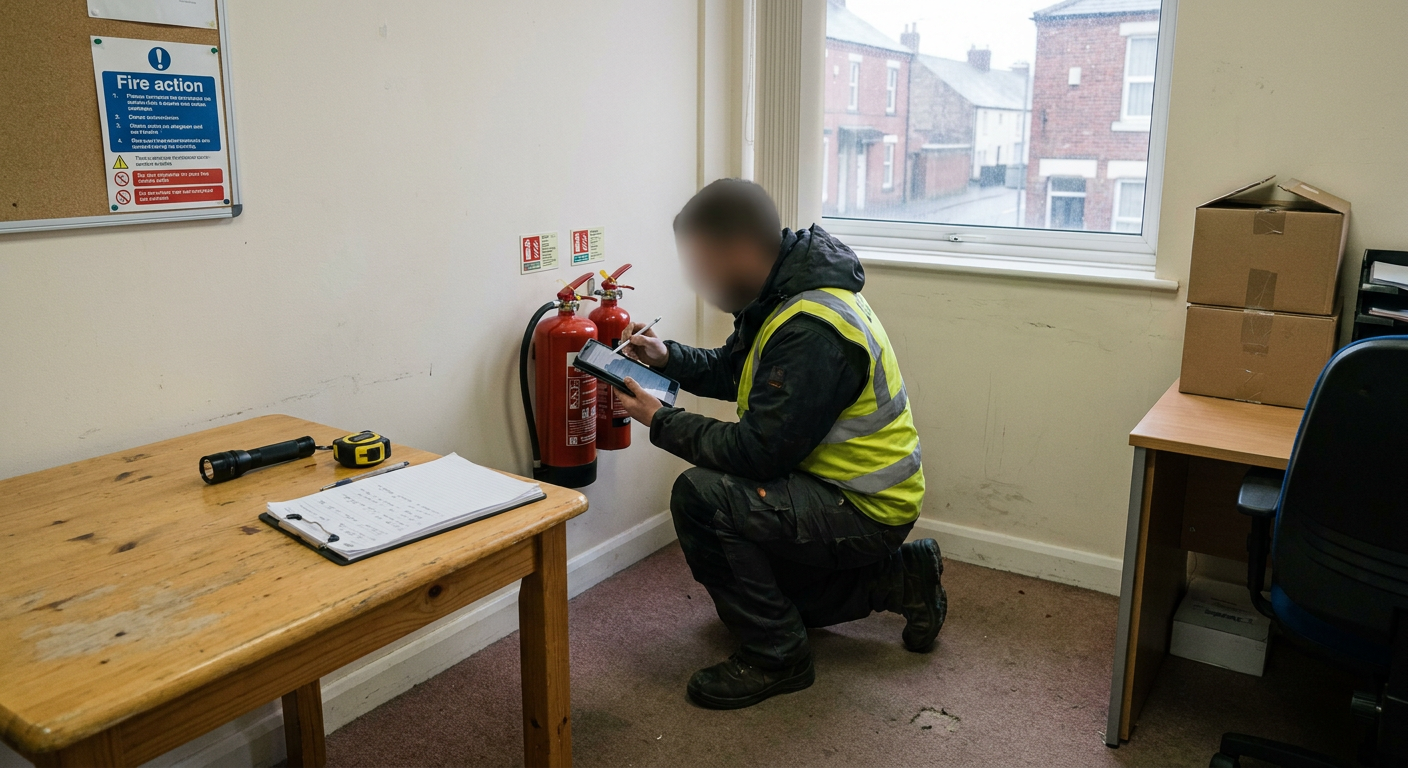
  2. Fire safety officer kneels beside two extinguishers in a small office, taking notes.

    Site visit arranged

    An assessor agrees a date and time to inspect the premises in person.
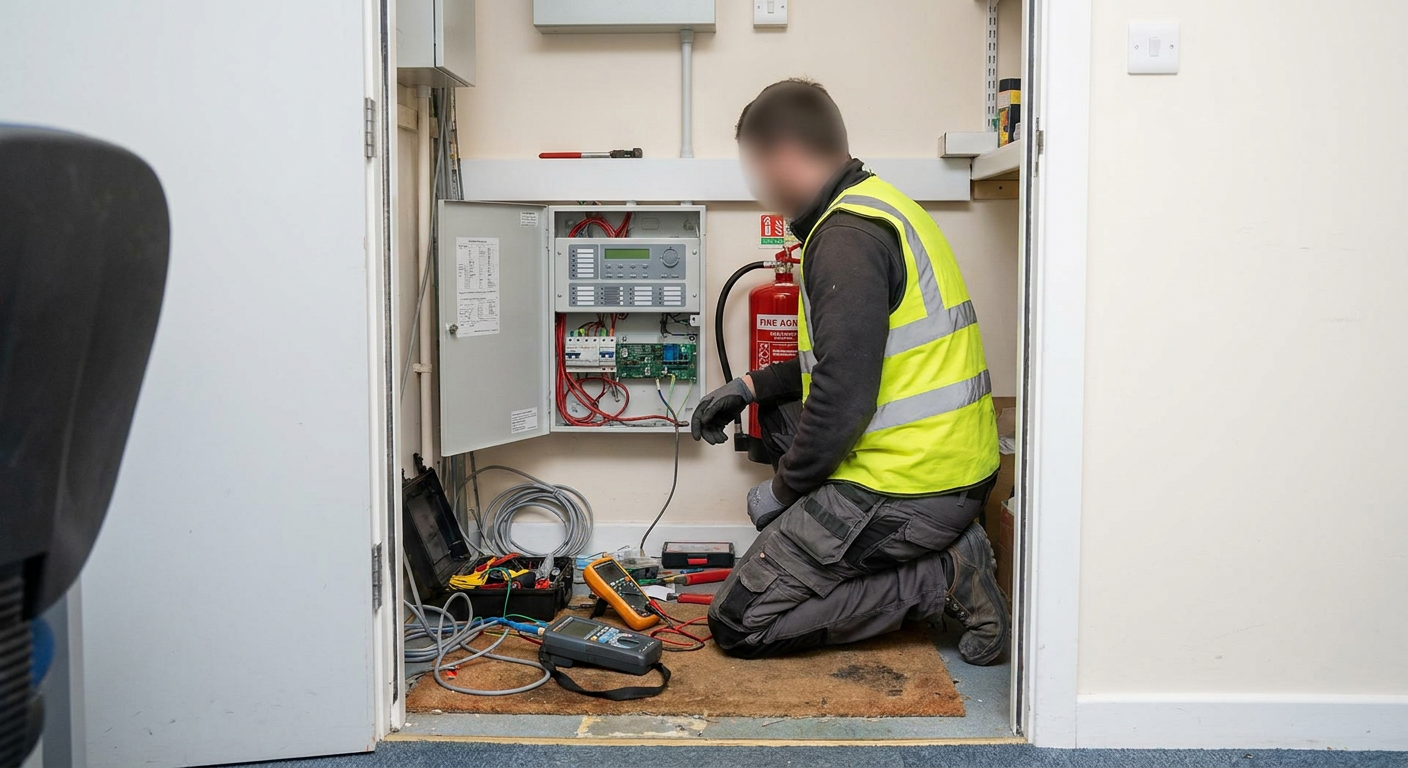
  3. Technician kneels at an open fire alarm panel beside an extinguisher, tools on the floor.

    Inspection carried out

    The assessor examines escape routes, fire doors, alarms and compartmentation barriers.
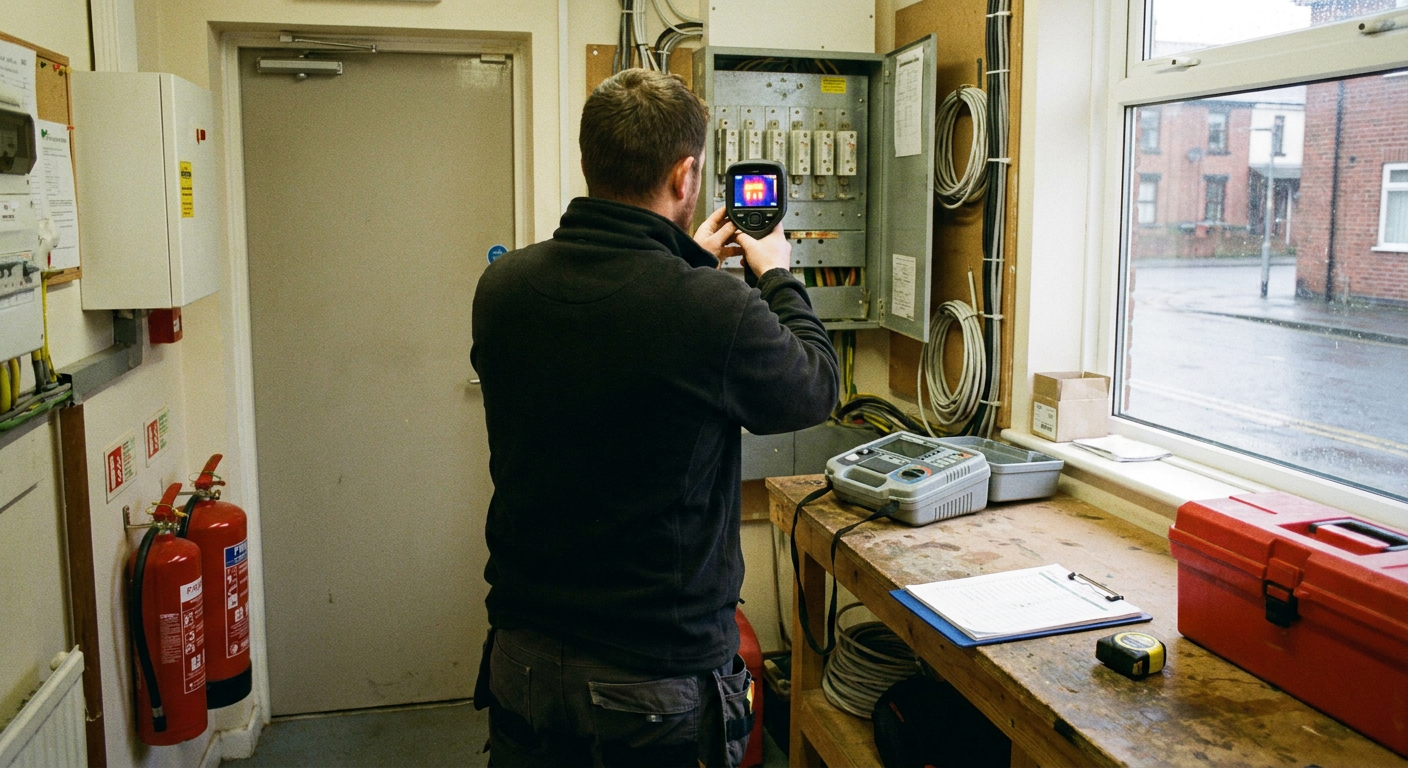
  4. Technician uses a thermal camera on an electrical panel near fire extinguishers.

    Report delivered

    Findings and required actions are written up and sent to the person who manages the building.

Checks made before any work begins

Before an assessor visits a building, certain details must be confirmed. Getting these right means the correct type of inspection is booked and no time is wasted on site.

  1. Building type identified

    The assessor confirms whether the premises is a house, a block of flats, an HMO or a workplace, since each requires a different approach.

  2. Responsible person named

    The assessor identifies who holds the legal duty for fire safety before writing any recommendations. This step rules out confusion over responsibility, so the right person receives the report and acts on it. Find out more about the [responsible person](/compliance/who-is-the-responsible-person).

  3. Scope agreed

    The enquiry specifies whether the job is a full assessment, a door inspection, a compartmentation survey or a training session.

  4. Access confirmed

    The assessor needs entry to communal areas, risers and plant rooms to complete the inspection. Arrangements are made before the visit date so keys are available and residents know what to expect during the assessment of your home.

If the building type and the requested service do not match, the assessor will recommend the correct one before visiting.

Send your enquiry about fire safety

Write what you know about the building and the problem. The details go to the specialist firm, who will respond directly. Sending an enquiry does not commit you to booking any work.

  • No obligation to proceed
  • Direct response from the firm
  • Details kept private

These details are passed to a specialist, as the privacy page describes.

Sending this costs you nothing. The privacy notice goes into what happens to your details. They reach one independent fire safety specialist covering Bexley, and that specialist may pay us when the enquiry is passed on. Comparing quotations with other firms remains entirely up to you.

Prefer email? Write to hello@bexleyfire.co.uk