Guide
Fire risk assessment types 1 to 4 in blocks of flats
Find out what the four fire risk assessment types mean for a block of flats in Bexley. Learn which type covers communal areas and when a more detailed survey becomes necessary.
Why blocks of flats use four assessment types
A house needs one look at its fire risks. A block of flats has shared corridors, stairwells, plant rooms and dozens of separate front doors behind them. The guidance used by assessors splits the work into four types so the person responsible for the building knows exactly what is being examined.
The split comes down to two questions: whether the assessor looks only at shared spaces or enters individual flats too, and whether the inspection stays visual or involves opening up construction to see hidden barriers. Combining those choices produces four distinct levels of detail. Each suits a different situation.
A newer block with no history of problems usually starts at the simplest level. An older conversion, or a building where residents have reported smoke travelling between floors, will need something more thorough. The specialist firm carrying out the work decides which type fits after discussing the building's age, layout and any past incidents with the person who manages it.
Type 1: communal areas without destructive checks
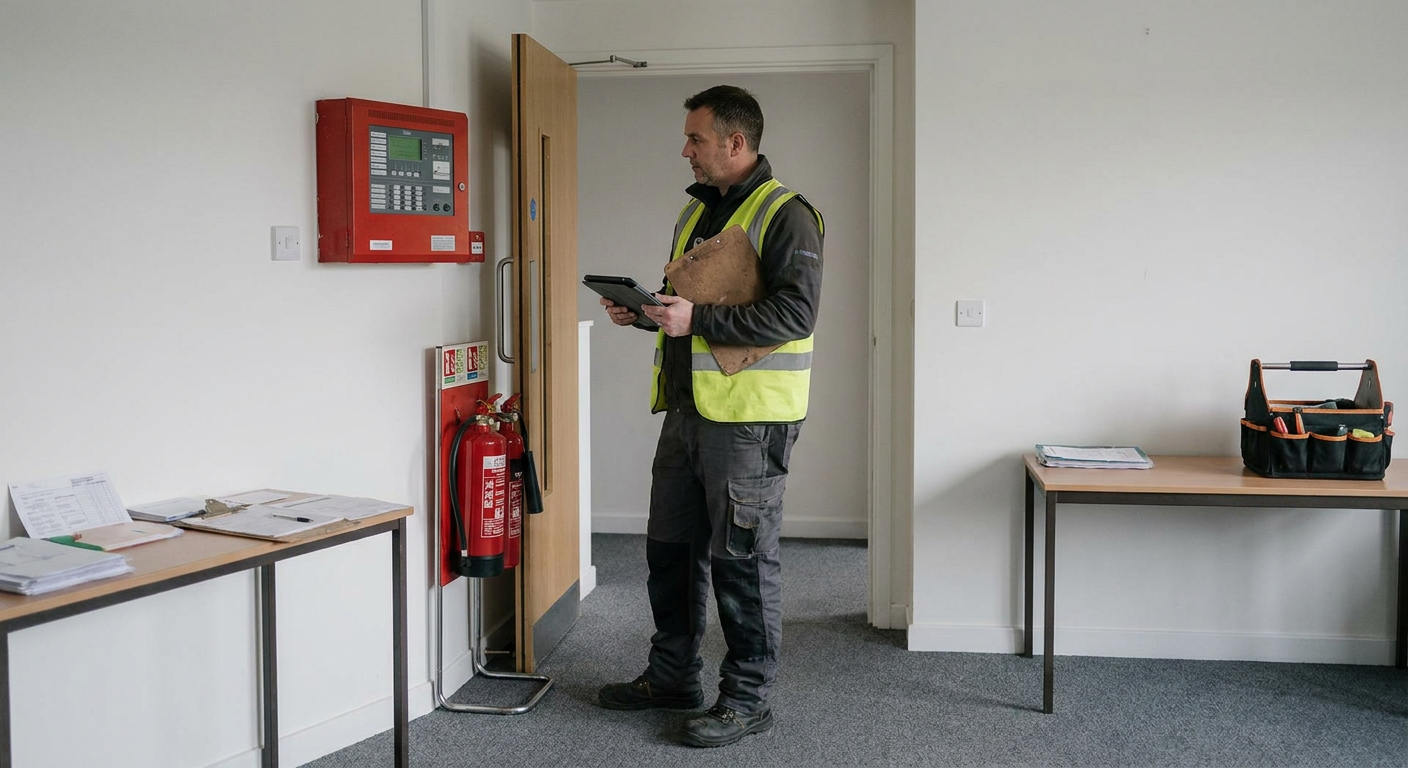
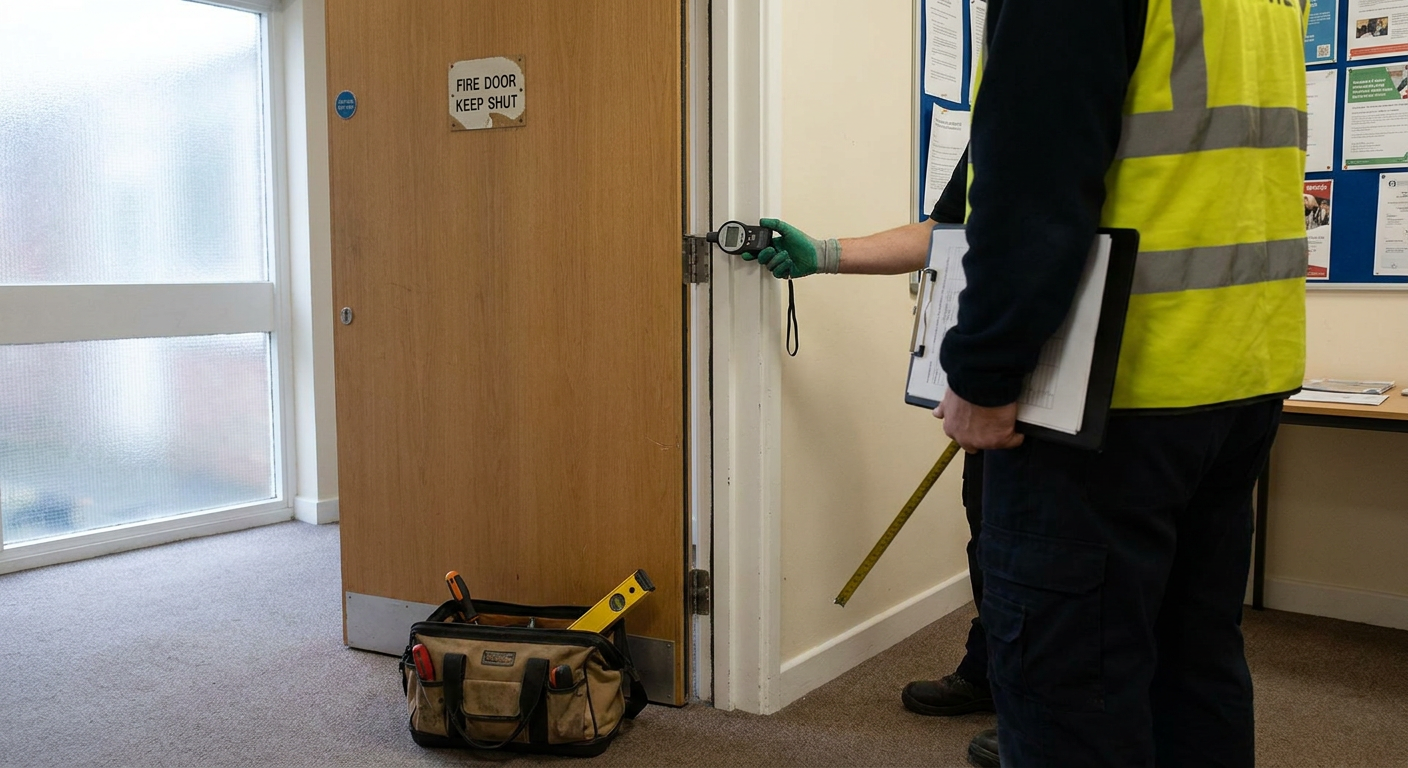
Type 1 is the standard assessment for most purpose-built blocks of flats in Bexley. The assessor examines every shared space: lobbies, staircases, landings, bin stores, plant rooms and the routes residents use to reach the street. They check that fire doors close properly, that emergency lighting works and that escape routes remain clear of stored items.
This type is non-destructive. Nobody drills into walls or lifts ceiling tiles. The assessor relies on what they can see, along with plans and maintenance records if those are available. Individual flats stay private. The front door of each flat forms part of the inspection because it protects the corridor from a fire inside, but the assessor does not go further than the threshold.
For a building managed under a stay-put policy, Type 1 confirms whether the shared parts support that approach. It is also the baseline required by law for anyone who controls the common areas of a residential block. If nothing unusual surfaces, a Type 1 assessment repeated at the recommended interval keeps the building compliant.
Type 2: opening up the shared structure
Sometimes a visual walk-through leaves questions. If the building was converted from another use, or if previous work altered the corridors, the assessor might recommend a Type 2 assessment. This covers the same communal areas as Type 1 but adds destructive investigation.
That means lifting floorboards, removing small sections of plasterboard or opening access panels to see what lies behind the visible surfaces. The goal is to verify that fire-stopping materials fill the gaps around pipes and cables, and that hidden voids cannot carry smoke from one floor to another. Because it involves making good afterwards, a Type 2 assessment requires planning. The specialist firm coordinates with contractors who repair the openings once the inspection finishes.
A Type 2 is rarely routine. It tends to follow a specific concern, such as a council letter questioning the compartmentation, or evidence that a recent refurbishment disturbed the original fire barriers. Buildings in Bexley that started life as large houses and were later divided into flats often warrant this closer look.
Type 3: adding the inside of individual flats
Type 3 extends the scope beyond the shared hallways and into the homes themselves. The assessor enters a representative sample of flats to evaluate the risk within each dwelling and how it relates to the rest of the building. They look at internal doors, kitchen layouts, alarm coverage and anything else that could influence how quickly a fire grows or how easily a resident escapes.
Because entering private homes requires consent, Type 3 assessments happen when the freeholder or managing agent has the legal right to access, or when leaseholders agree to take part. Landlords who rent out several flats in the same block often arrange this type to understand the full picture rather than relying on assumptions about what happens behind closed doors.
Like Type 1, a Type 3 assessment remains non-destructive. The inspector observes and records without opening up walls. This makes it practical for occupied buildings where residents would object to repair work inside their homes.
Type 4: full access with destructive investigation
Type 4 combines the breadth of Type 3 with the depth of Type 2. The assessor enters selected flats and carries out destructive checks both inside the dwellings and in the communal areas. Panels come off, voids are inspected, and the true condition of the fire separation becomes visible.
This is the most demanding level. It requires coordination with residents, contractors to make good the opened surfaces, and a clear reason for going that far. A Type 4 typically follows a serious incident, persistent doubts about the building's construction, or a requirement from the local authority after reviewing earlier reports.
In Bexley, older conversions where records are missing sometimes need a Type 4 before anyone can be confident the compartmentation holds. Once completed, the resulting report gives the responsible person a complete understanding of the building, allowing them to plan any remedial work accurately rather than guessing at what might be wrong behind the finishes.
Which type your building needs
Most blocks of flats in Bexley begin with a Type 1 assessment. It satisfies the legal duty for communal areas and establishes a baseline record. If that report identifies gaps in knowledge, or if the building's history suggests hidden weaknesses, the assessor will recommend moving to Type 2 or beyond.
The decision rests on facts: the age of the building, the quality of available plans, any alterations carried out over the years and whether residents have raised concerns about smoke or noise passing between flats. A specialist firm experienced in fire risk management will explain why a particular type suits the circumstances before any work starts.
Arranging the right level of assessment avoids paying for unnecessary intrusion while ensuring genuine risks do not go unchecked. The responsible person should keep the completed report accessible and review it whenever the building changes hands, undergoes renovation or reaches the date set for the next assessment.
Ask about a fire risk assessment for your flats
Send details about your building and receive advice on which assessment type applies. There is no obligation to proceed, and no fee for the initial conversation.
- No obligation to proceed
- Local to Bexley
- Plain advice first