Guide
Fire safety log book for your building: what to record
A fire safety log book holds the proof that alarms, doors and drills are checked on time. Find out exactly what needs recording for your building in Bexley, from weekly tests to annual inspections.
Why a fire safety log book matters for your home
If you manage a block of flats or an HMO in Bexley, a fire safety log book is where you keep every check, test and repair in one place. The responsible person named under fire safety law has a duty to maintain it. Without written records, there is no way to prove that smoke alarms were tested last Tuesday or that a faulty fire door was fixed before someone got hurt.
A specialist firm carrying out a fire risk assessment will ask to see this book. They look at it to understand whether the building is being maintained between their visits. Missing entries do not just look careless. They suggest the checks might not be happening at all. For landlords holding an HMO licence, the council can request these records as part of their conditions.
The log book does not need to be complicated. A ring binder kept near the main entrance works fine. What matters is that every entry includes a date, the name of the person who did the work, and what they found. If a problem was spotted, write down what happened next.
Recording alarm tests and emergency lighting checks
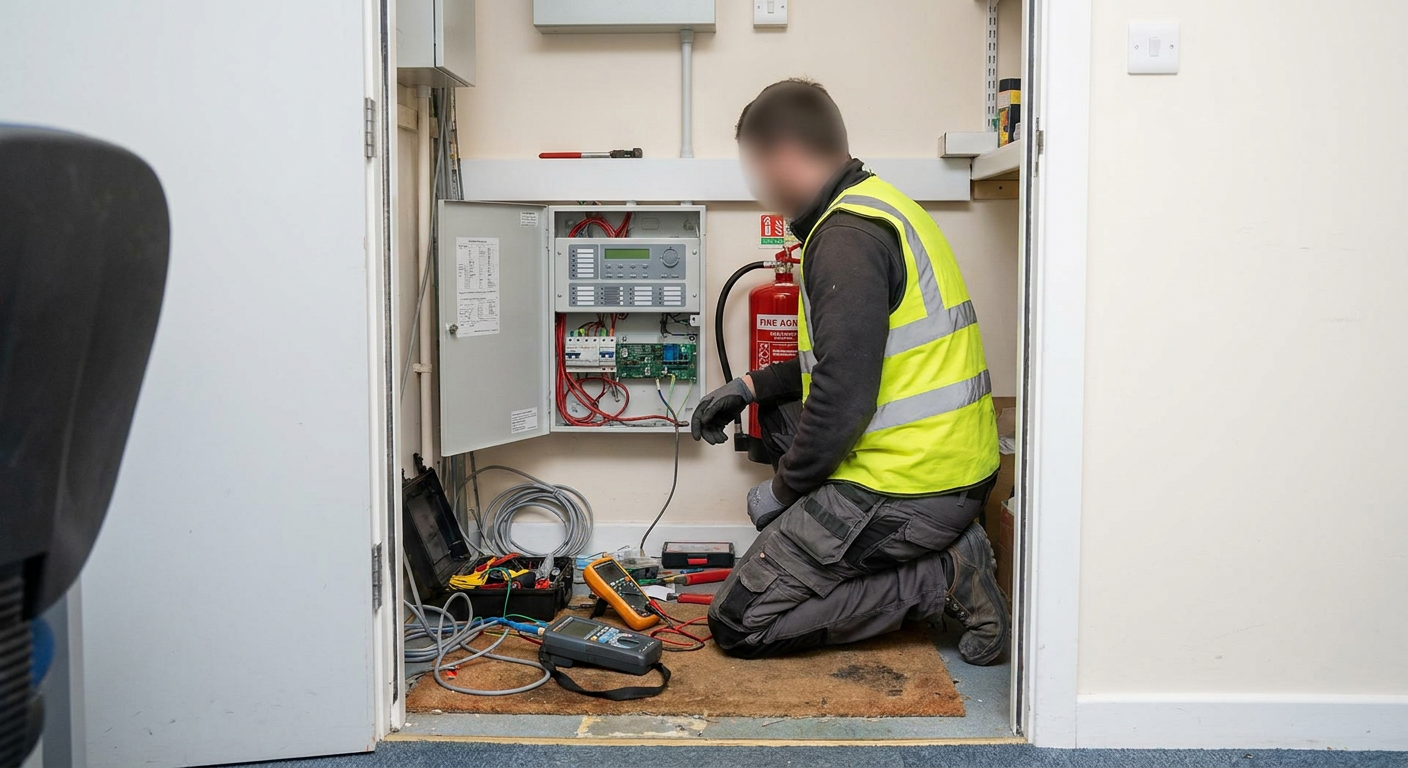
Smoke alarms and fire alarm systems need regular testing. In most buildings, this means a weekly check where someone presses the test button on each call point or detector. Write down which device was tested, whether it sounded correctly, and who carried it out. If a battery needed replacing or a detector failed to sound, record the fault and the date it was repaired.
Emergency lighting in communal corridors and stairwells follows a similar pattern. A short monthly test confirms the lights come on when the mains power is cut. Once a year, a specialist firm should run a full duration test to confirm the batteries last long enough for everyone to leave the building safely. Both the monthly flick tests and the annual drain tests belong in the log book.
Details matter here. Note the exact location of each fitting. A vague entry saying alarms tested is less useful than recording that the detector outside flat four sounded clearly but the one in the basement store room did not.
Fire door inspections and compartmentation repairs
Fire doors only work if they close fully and seal properly. Under the Fire Safety England Regulations 2022, buildings over eleven metres tall require quarterly checks on every fire door in the common parts. Each inspection should note whether the door closes onto its latch without sticking, whether the intumescent strips are intact, and whether the hinges are secure.
When a defect is found, the log book should show when it was reported and when a specialist firm completed the repair. A door that drags on the carpet or has a broken closer is a gap in the building's compartmentation. Compartmentation is the system of walls, floors and doors designed to hold back smoke and flame. If any part of it is breached during maintenance work, such as a plumber drilling through a corridor wall, the repair must be recorded once a specialist firm restores the barrier.
Keep receipts and job sheets from contractors alongside the log entries. They provide a clear timeline showing that problems were identified and dealt with promptly.
Drills, training sessions and evacuation plans
A fire evacuation plan is only useful if the people living or working in the building know what it says. When a drill takes place, record the date, how long it took to clear the building, and any issues that came up. Perhaps a stairwell was blocked by pushchairs, or residents in one flat did not hear the alarm. These observations tell you what to fix before a real fire happens.
Training sessions also go in the book. If staff or wardens attend fire safety awareness training or warden training, note who went, which course they completed, and the date. Certificates can be filed behind the relevant page.
For buildings where some residents cannot evacuate quickly, personal emergency evacuation plans are prepared for them. The log book should reference these plans and record when they were reviewed. Anyone new moving into the building might need one, so checking the list regularly keeps it accurate.
Equipment servicing and contractor visits
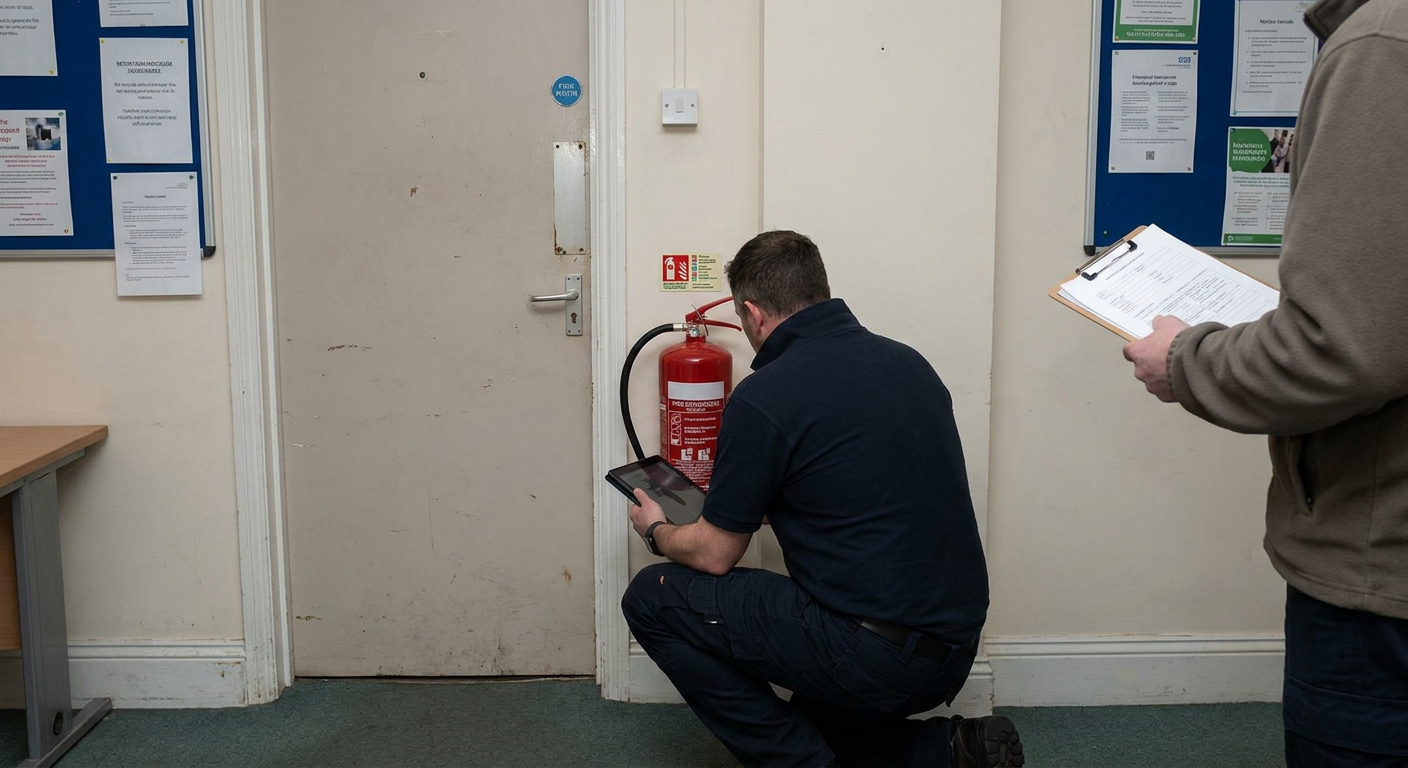
Fire extinguishers, dry risers and sprinkler systems each have their own service schedule. An annual visit from a specialist firm to inspect extinguishers should be logged with the date, the number of units checked, and any that were replaced or recharged. Dry riser pressure tests follow the same rule. Equipment testing keeps these items working when they are needed, so every visit belongs in the log book. Find out what fire extinguisher testing advice covers for alarms and equipment if you are unsure which items need checking and how often. When contractors visit for other reasons, such as electrical work or gas servicing, their presence is worth noting. This prevents small jobs from quietly damaging the fire defences in your home. Compartmentation surveys look for exactly this kind of damage, where a pipe or cable has been pushed through a barrier without the gap being filled. A specialist firm carrying out a compartmentation survey in Bexley checks those barriers and records what they find, and that record belongs in the same place as your maintenance notes. Health and safety reports produced after broader premises checks often contain recommendations that affect fire safety. File a copy of the report alongside the fire records and cross-reference any actions taken.
Ask about fire safety services for your building
Send a message about your building in Bexley. A specialist firm will reply to discuss what is needed. There is no obligation to book anything.
- No booking required
- Local to Bexley
- Plain advice given