Guide
Fire safety signs in communal areas: what is needed
Find out which fire safety signs belong in the corridors, stairways and lobbies of a block of flats. Learn what each sign means and how it helps residents find their way out during a fire.
Why signs matter in shared hallways and stairwells
A fire in a block of flats fills corridors with smoke quickly. Residents who know their building well can still become disoriented when visibility drops and alarms sound. Signs give them fixed points to follow without thinking.
In Bexley, the responsible person for a building must make sure escape routes are clear and identifiable. Fire safety signs form part of that duty. They do not replace a working alarm system or a written evacuation plan, but they tell people where to go when those systems activate.
The specialist firm carrying out a fire risk assessment will check whether the right signs are present, readable and positioned correctly. Missing or faded signs often appear as recommendations in the report. A compartmentation survey might also highlight places where a sign is needed because a route has changed.
Green running man signs and escape routes
The most common fire safety sign in any block of flats is the green running man. It shows a figure moving towards a door or along a corridor. These signs mark the escape route from every floor to the final exit.
They must be placed at every change of direction. If a corridor turns left, a sign should point left before the turn so nobody walks past it. At the bottom of a stairwell, another sign directs people towards the street door.
Photoluminescent versions absorb light during the day and glow when the power fails. In buildings without emergency lighting on every landing, these glowing signs keep the route visible through smoke. The specialist firm reviewing the building will note whether standard printed signs are sufficient or if photoluminescent ones are required for the specific layout.
Fire action notices near doors and call points
Every resident needs to know what to do when they hear the alarm. Fire action notices explain the steps: leave the flat, close the door, use the stairs, call the emergency services. These blue and white signs sit next to manual call points and on the inside of flat entrance doors in some buildings.
The wording depends on the building's policy. A block operating a stay put strategy uses different instructions from one where everyone evacuates immediately. The notice must match the actual fire strategy report produced for the building. If the policy changes after a review, the signs must change too.
Landlords managing an HMO face similar requirements. The fire action notice in a shared house tells occupants where the assembly point is and warns against using lifts.
Signs for fire doors and equipment
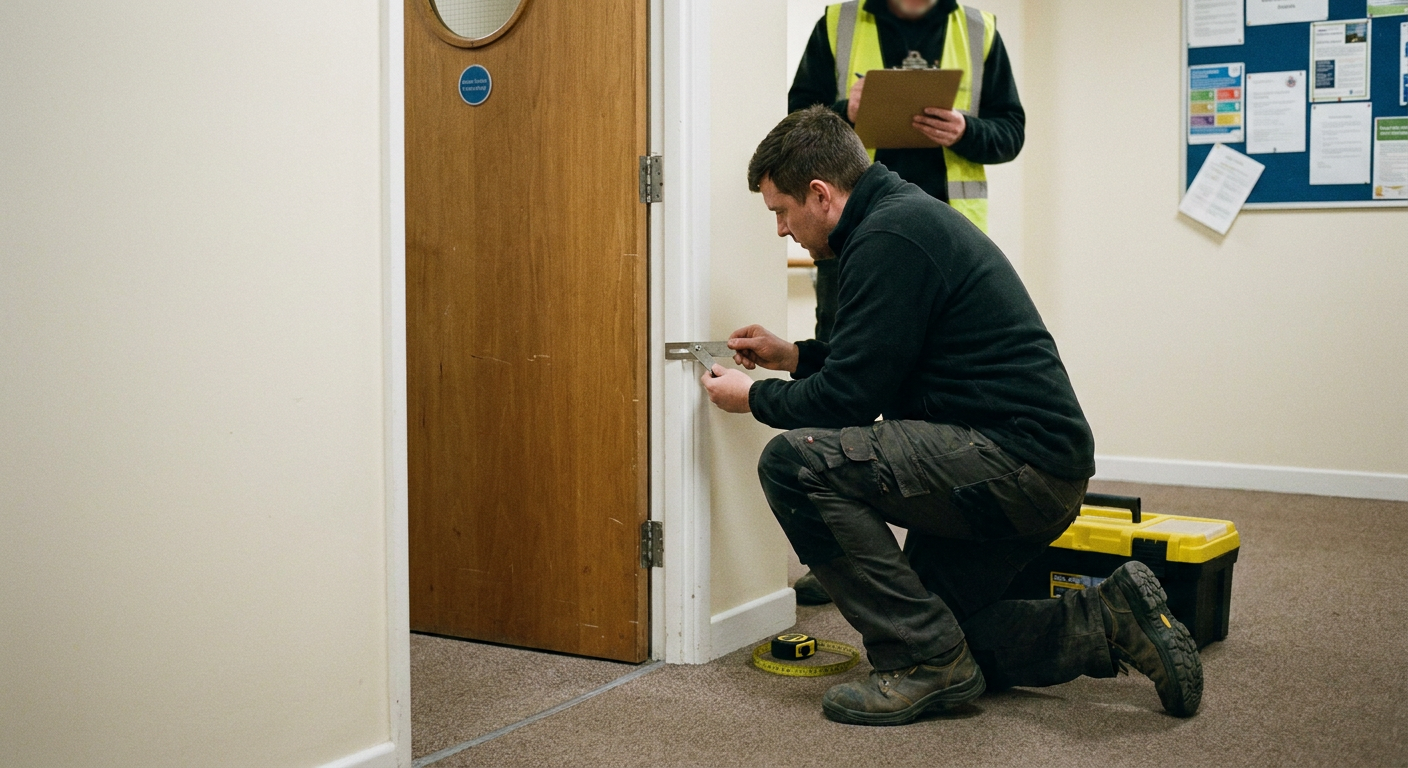
Fire doors need their own signage. A blue circular sign reading "Fire door keep shut" goes on both faces of doors protecting stairwells and corridors. Without it, residents may wedge doors open for convenience, breaking the compartmentation that slows fire spread.
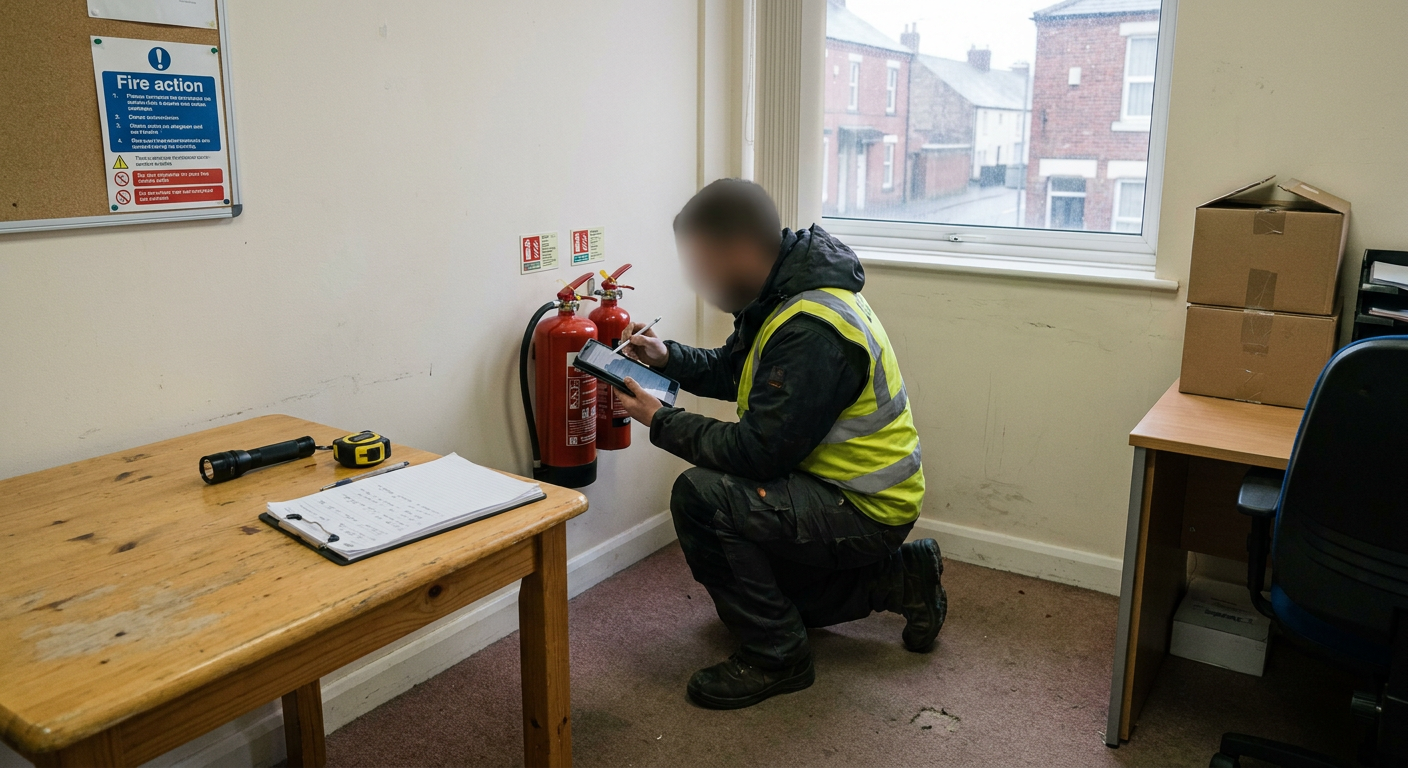
Where a door is held open by a magnetic release linked to the alarm, the sign states it must remain open only while the system is active. Equipment signs also matter. Red rectangular signs mark the location of extinguishers, hose reels and dry riser inlets. Even in blocks where residents are not expected to fight a fire, maintenance contractors and firefighters rely on these markers.
During a fire door inspection, the specialist checks that the correct sign is fitted and legible. Peeling vinyl or paint over old lettering counts as a defect.
Keeping signs visible and up to date
A sign hidden behind a noticeboard, a bicycle or a stack of parcels does its job poorly. Corridors in blocks of flats attract stored items, and signs get covered. The responsible person must keep sightlines clear.
Fading matters too. Sunlight through lobby windows bleaches printed signs over time. Cheap stickers peel at the edges. During routine health and safety checks, worn signs should be flagged for replacement before a formal inspection identifies them as a failure.
When a building undergoes renovation, temporary signs must cover any removed permanent ones. If a stairwell is closed for repairs, new directional signs route people through an alternative path. Once work finishes, the original signs go back. Keeping a record of sign locations in the fire safety log book helps whoever manages the building track what belongs where.
Ask about fire safety in your building
Send the details of your building. A specialist firm will read them and reply with what to do next. There is no obligation to proceed.
- No commitment required
- Local specialist firms
- Clear next steps