Guide
Flat entrance doors: leaseholder or freeholder duty?
A flat entrance door sits between your home and the shared hallway. Fire safety law places specific duties on whoever controls it. Find out who holds that responsibility, what a compliant door needs, and how to arrange an inspection.
Why the front door matters in a block of flats
The door to your flat is a fire door. It separates your home from the communal corridor, stairs and landings that everyone uses to get out during a fire. If it fails, smoke and flames spread into the escape route before people can use it.
Blocks of flats rely on compartmentation to contain a fire inside the room or flat where it starts. The entrance door is part of that barrier. A specialist firm carrying out a compartmentation survey will check whether the door, its frame and the surrounding wall form a continuous seal.
Because the door protects other residents as well as you, fire safety law treats it differently from internal doors inside your home. The rules apply whether the building follows a stay-put policy or a simultaneous evacuation plan. In either case, the entrance door must hold back fire long enough for people to leave safely.
Who the responsible person is for flat entrance doors
Under the Regulatory Reform (Fire Safety) Order 2005, someone must be named as the responsible person for the shared parts of a block of flats. That role usually falls to the freeholder, the managing agent or a residents management company. Their duty covers corridors, stairwells, lobbies and the outer face of every flat entrance door.
The Fire Safety Act 2021 made this explicit. It confirmed that the structure and external walls of a building, along with flat entrance doors, fall within the scope of a fire risk assessment for the common parts. So the responsible person cannot treat your front door as solely your problem.
If you are unsure who holds this duty in your building, the guidance on who the responsible person is explains how the law assigns the role. In Bexley, local firms handle these enquiries and direct them to the specialist assessors who carry out the work.
What the leaseholder still has to do
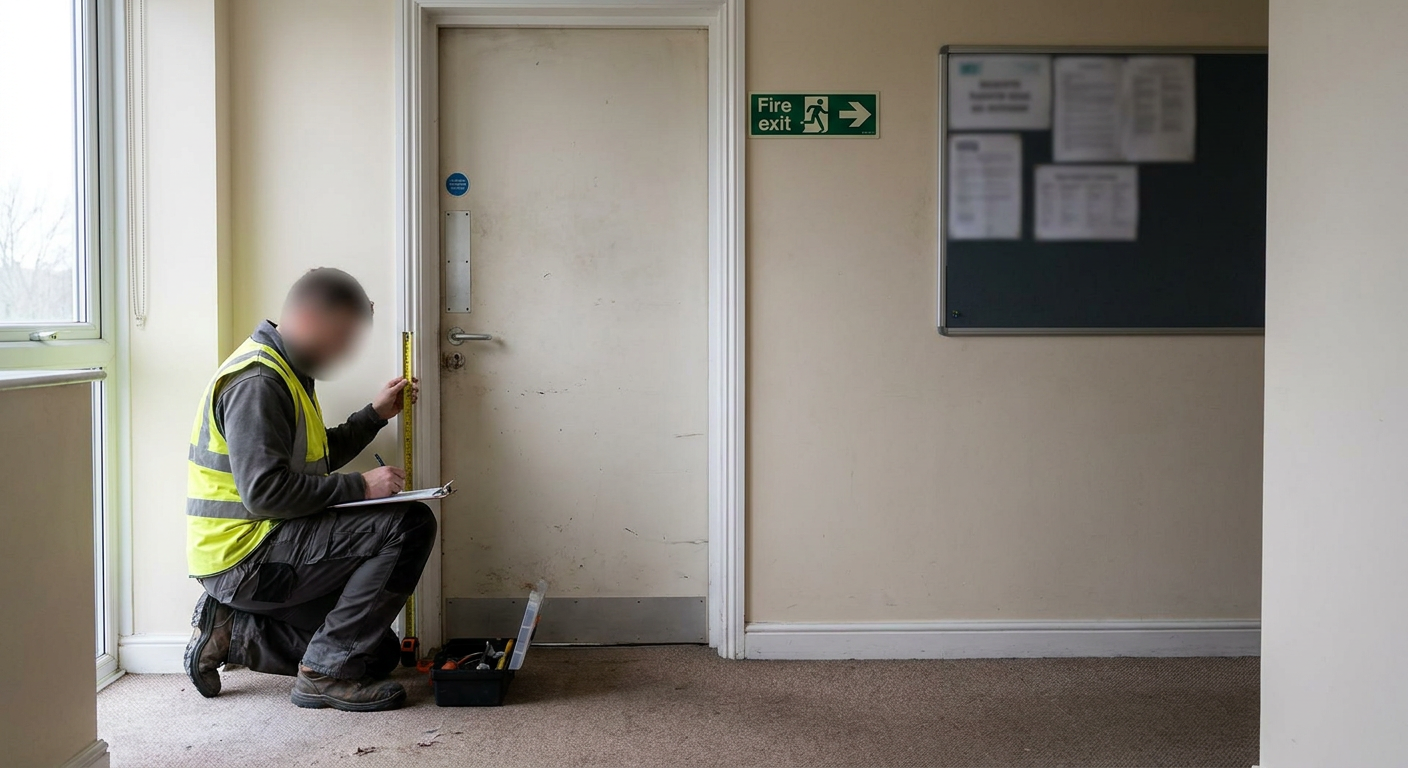
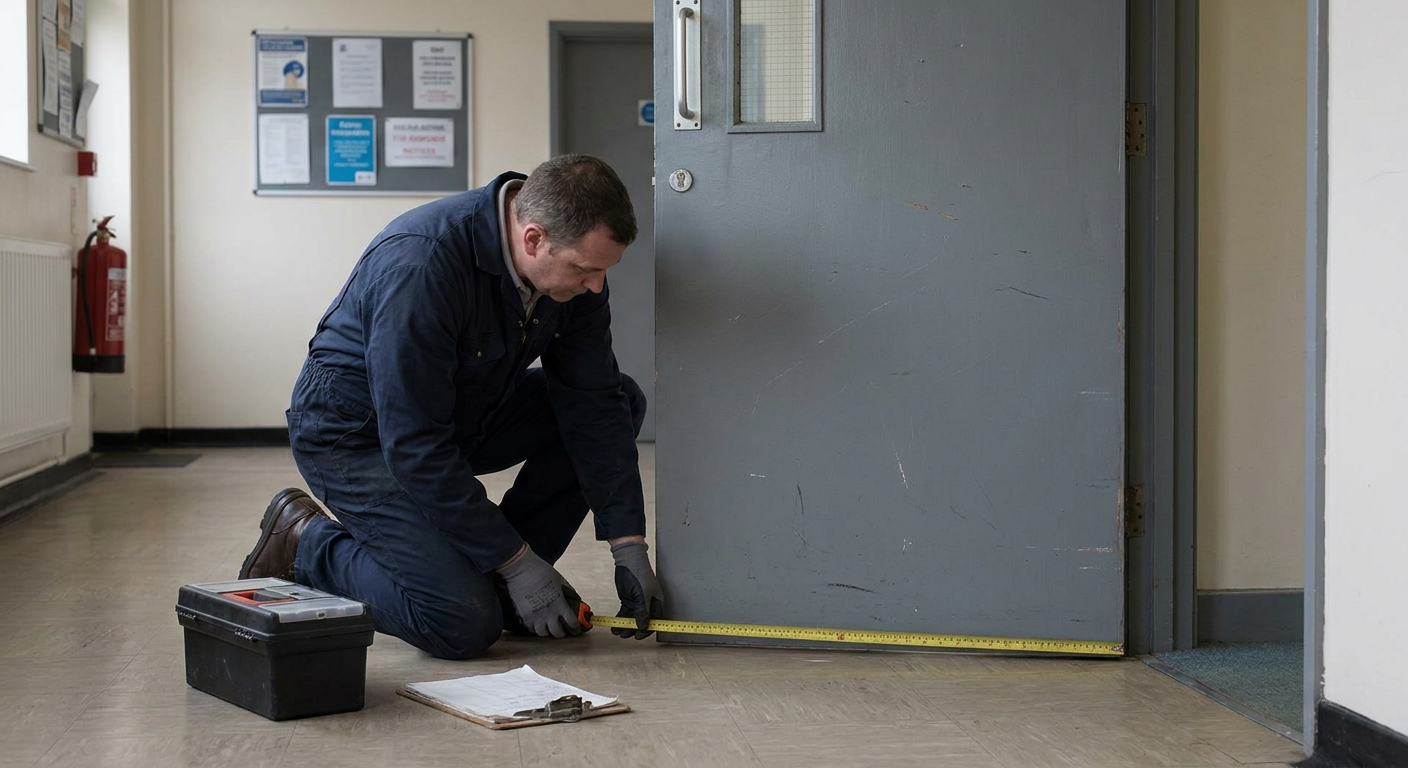
Your lease probably says something about your front door. Many leases require the leaseholder to maintain it, keep it in good repair and not alter it without written consent. This creates a split duty. The freeholder must ensure the door meets fire safety standards across the building. If you want to change the look of your door, the replacement must carry the same fire rating and be fitted by someone who understands the specification. When a specialist firm carries out a fire door inspection in a block, they look at both sides of this arrangement. They check whether the door performs correctly and whether any leaseholder modifications have compromised it. The inspection covers the hinges, seals, glazing and gaps around the frame.
Fire rating and what the door needs to include
A flat entrance door in a residential block typically needs to provide thirty minutes of fire resistance. This is known as an FD30 rating. Older buildings sometimes have doors that were never tested but still perform adequately if they are solid, thick enough and fitted with the right hardware. The door must have a working self-closing mechanism. Intumescent strips expand when heated to seal the gap between the door and the frame. Cold smoke seals prevent smoke from leaking through before the strips activate. The Fire Safety (England) Regulations 2022 added further requirements for taller buildings. Responsible persons must now check flat entrance doors more frequently and record the results. Guidance on quarterly fire door checks explains what those records should contain and how often the specialist firm needs to visit.
Arranging an inspection or assessment in Bexley
If you are a leaseholder worried about your front door, or a freeholder managing a block in Bexley, the first step is a fire risk assessment. The assessor examines the building, identifies problems and sets out what needs fixing. Flat entrance doors feature in every assessment of a residential block.
Specialist firms carry out the inspections and surveys. They measure gaps, test closers, check certification marks and report on anything that falls short. Where doors need replacing or upgrading, they specify the exact standard required so contractors know what to fit.
You can send an enquiry about fire risk assessments in Bexley to find out what the process involves. The specialist firm will confirm whether your building needs a full assessment, a targeted door inspection or a wider review of its compartmentation. Getting this right means every resident can trust their front door to do its job in a fire.
Ask about your building's fire doors
Send the details of your block. A specialist firm will respond with what they recommend, and sending an enquiry does not commit you to booking any work.
- No obligation to proceed
- Local to Bexley
- Clear next steps