Fire safety guide
Stay put or evacuate: fire policy in blocks of flats
Find out why some Bexley blocks of flats tell residents to stay put while others require everyone to leave. Learn what each policy relies on to keep people safe, and how a specialist firm checks the building supports it.
Why blocks of flats use different fire policies
A block of flats does not work like a house or an office. People live above, below and beside each other, sharing corridors, stairs and lobbies. If a fire starts in one flat, the building needs a plan that keeps everyone else safe without causing panic in the stairwell.
Two main approaches exist. The first is a stay put policy. Residents in flats away from the fire remain inside their homes while the fire service deals with the blaze. The second is simultaneous evacuation, where every resident leaves the building at once when an alarm sounds.
The choice between them depends entirely on how the building was constructed and how well it has been maintained over the years. A specialist fire risk assessor examines the structure, the escape routes and the existing alarms before recommending which policy suits a particular block in Bexley. Getting this wrong means residents might follow instructions that put them in danger rather than keeping them safe.
How a stay put policy protects residents
A stay put policy assumes the building can contain a fire inside the flat where it started. Walls, floors and ceilings must resist flames and smoke long enough for the fire service to arrive and extinguish the blaze. This separation is called compartmentation.
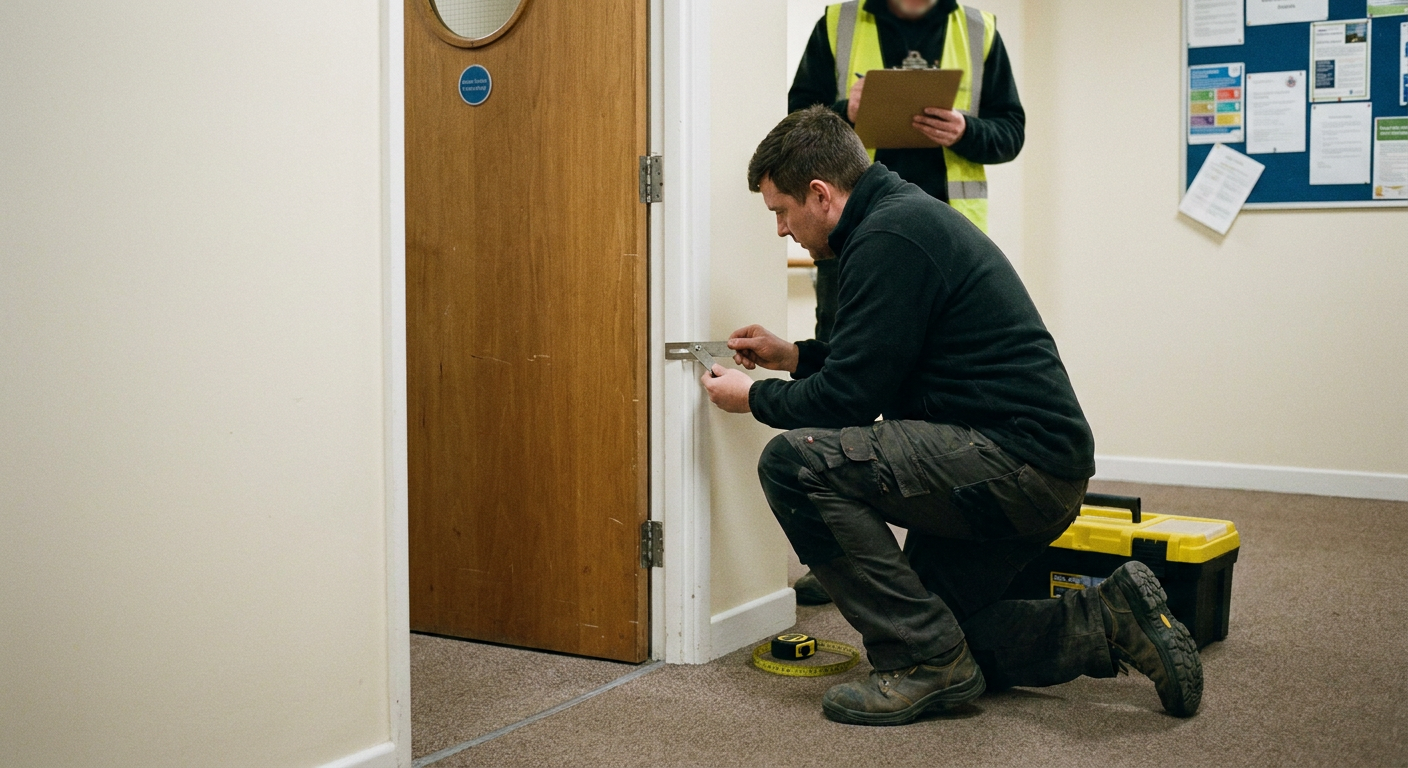
For the policy to work, every barrier must be intact. Flat entrance doors need to close fully against their frames, fitted with working self-closers and intumescent strips that swell under heat to seal gaps. A specialist firm inspects these doors regularly because a warped frame or a missing strip defeats the whole system. Corridors and stairwells also need protection from smoke, so ventilation and fire-resisting walls matter just as much as the front door.
When the barriers hold, residents in other flats are safer inside than they would be walking through a smoke-filled corridor. They wait for instructions from the fire service. But if the building has been altered poorly, or maintenance has slipped, the compartments fail. Smoke travels through ceiling voids or past damaged doors. At that point, a stay put policy becomes dangerous, and the responsible person must arrange for a specialist to reassess the building and change the approach.
When simultaneous evacuation is the right choice
Some buildings cannot safely support a stay put policy. Older conversions, timber-framed structures or blocks where compartmentation has broken down beyond repair need everyone to leave together when an alarm sounds.
Simultaneous evacuation requires a reliable way to alert every resident at the same time. That usually means a communal fire alarm system linked to detectors in hallways, lobbies and sometimes individual flats. The stairs must be wide enough to handle the flow of people, and emergency lighting must guide them if the power fails.
A fire strategy report prepared by a specialist sets out exactly how this should work. It maps the escape routes, specifies the alarm equipment and defines who takes charge during a drill or a real event. Without that document, residents do not know what to do, and wardens have no clear instructions to follow. In Bexley, many converted houses turned into flats fall into this category because their original layouts were never designed to trap a fire inside a single room.
What the responsible person must do
Whoever manages the building holds legal duties under fire safety law. This responsible person might be a freeholder, a managing agent or a residents association. They must commission a fire risk assessment, act on its findings and ensure the chosen policy matches the actual condition of the building.
If the assessment recommends changes, such as upgrading doors or installing new alarms, the responsible person arranges for specialist firms to carry out that work. They also maintain records in a fire safety log book so inspectors can see what has been checked and when.
Under the Fire Safety (England) Regulations 2022, taller buildings face additional requirements. But even low-rise blocks in Bexley need regular attention. Quarterly checks on flat entrance doors are now expected in many cases. The responsible person does not do this work themselves. They hire specialists to inspect, test and report back. Their job is to make sure those reports are acted on promptly, so the fire policy written on paper matches the reality of the building residents sleep in every night.
Keeping the policy accurate over time
A fire policy is not something you set once and forget. Buildings change. Residents replace doors, run cables through walls or store belongings in corridors. Each alteration can weaken the barriers that a stay put policy depends on, or block the routes a simultaneous evacuation requires.
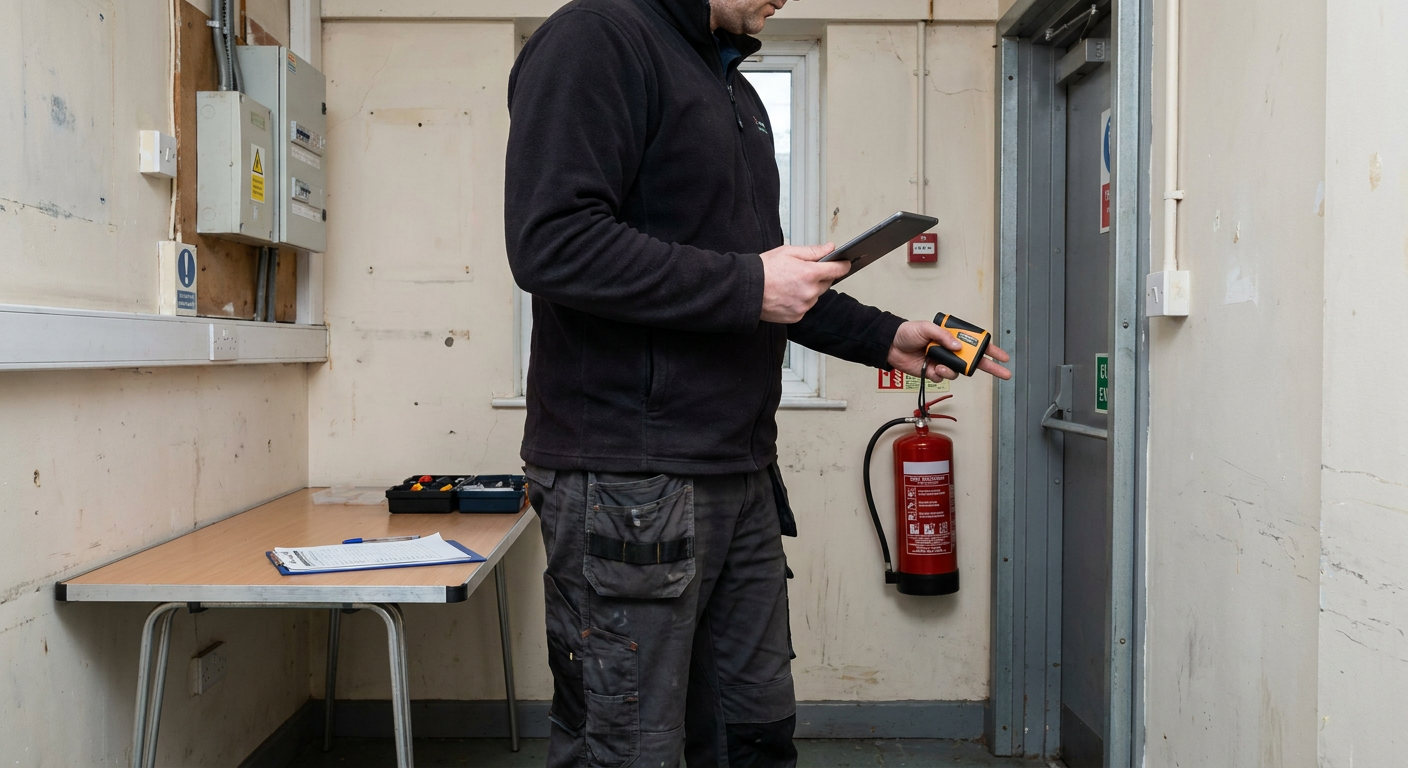
Regular reviews catch these problems early. A specialist firm revisits the block, checks the compartmentation, tests the alarm system and confirms the escape routes remain clear. If the building has deteriorated, the policy may need to switch from stay put to evacuation until repairs are finished.
Training matters too. Residents need to understand what their building expects them to do. Clear signage in communal areas tells people whether to stay or go. Nominated persons or fire wardens receive specific training so they can guide others calmly. When everyone knows the plan, confusion drops and the response to a real fire stays controlled. Keeping that knowledge current means repeating the process whenever the building changes hands or undergoes significant work.
Ask about your building's fire policy
Send details about your block of flats. A specialist firm will review the information and explain what happens next, with no obligation to proceed.
- No commitment required
- Local Bexley specialists
- Clear next steps